A dumpster that’s too small fills up before the next scheduled pickup. One that’s too large leaves you paying for capacity your business rarely uses. Neither is good for your waste management budget.
Knowing how to choose commercial dumpster size starts with three things: how much trash your business generates, what type of waste you’re disposing of, and how often the container needs to be emptied.
For routine commercial waste, most businesses choose between 2-, 4-, 6-, and 8-yard front-load dumpsters. Construction projects and major cleanouts typically require larger roll-off containers.
This guide explains commercial dumpster sizes, capacities, costs, and collection schedules so you can select the right option without overpaying.
Commercial Dumpster Size Comparison: Which One Fits Your Business?
Commercial dumpsters are measured in cubic yards, which describe how much space the container holds.
One cubic yard equals 27 cubic feet.
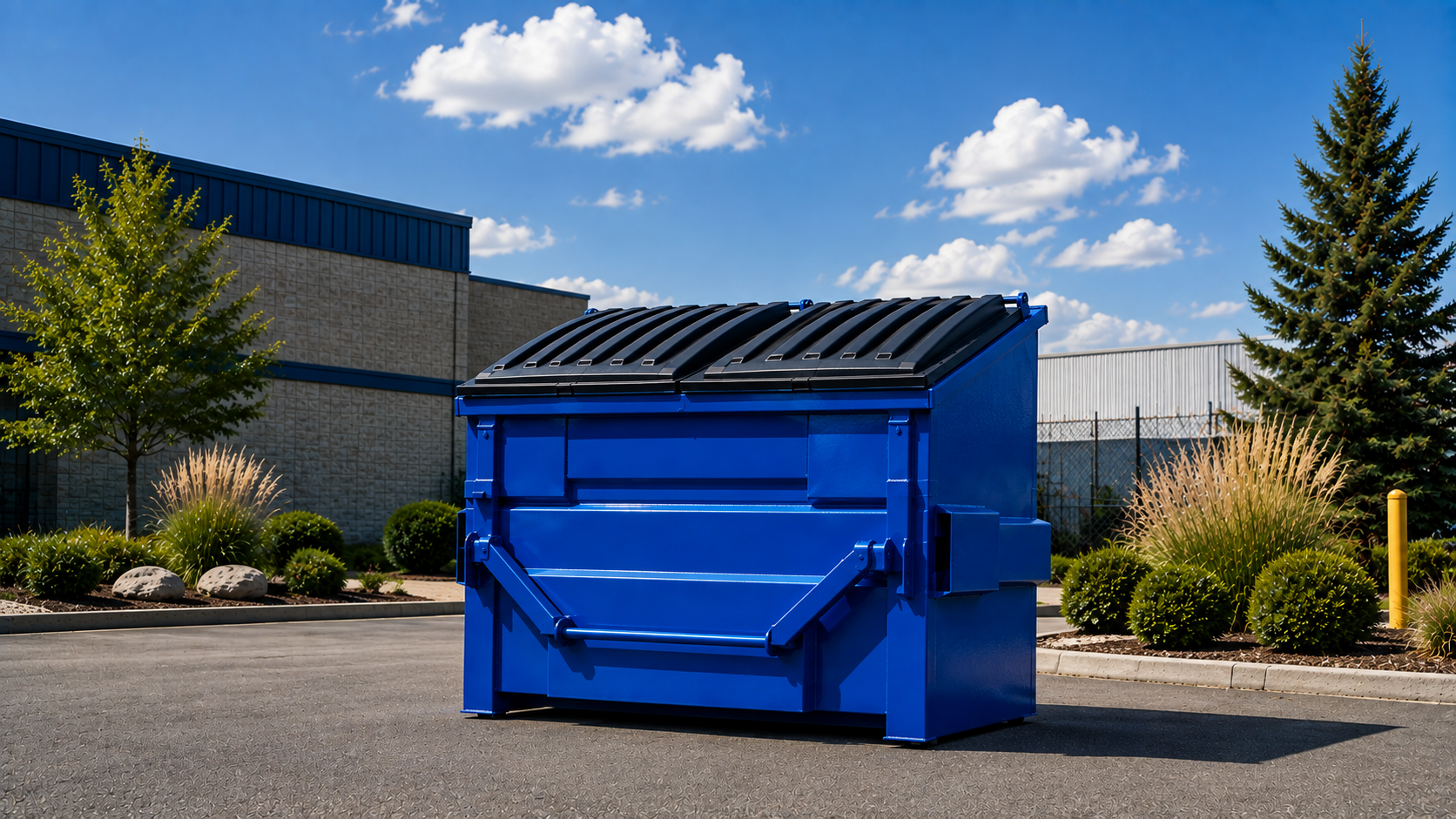
At Rearden Environmental, we offer four standard front-load dumpster sizes for recurring commercial waste collection. The following table shows the size and capacity for these dumpsters.
| Dumpster Size | Capacity | Best For | Typical Waste |
|---|---|---|---|
| 2 Yard | 2 cubic yards | Small offices, salons, boutiques | Paper, packaging, light business trash |
| 4 Yard | 4 cubic yards | Mid-sized restaurants, gas stations, retail | Food waste, boxes, everyday business trash |
| 6 Yard | 6 cubic yards | Grocery stores, apartments, chain restaurants | Higher-volume mixed business waste |
| 8 Yard | 8 cubic yards | Warehouses, large restaurants, manufacturing facilities | Large quantities of approved commercial waste |
Capacity refers to nominal volume, not maximum permitted weight. Actual loading capacity depends on the material and container requirements.
A 4-yard dumpster holds twice the nominal volume of a 2-yard container, while an 8-yard dumpster provides four times as much space.
However, that doesn’t automatically mean the larger container is more economical.
The right choice depends on how quickly your business fills it and how frequently you schedule collection.
Understanding the Different Commercial Dumpster Sizes
Each container is designed for a different level of waste generation.
The following dimensions come from Rearden Environmental’s commercial dumpster service specifications.
2-Yard Commercial Dumpster: Best for Small Businesses
Dimensions:
- Width: 6 feet 2 inches
- Height: 3 feet 7 inches
- Available on wheels
A 2-yard dumpster is the smallest commercial front-load container offered by Rearden Environmental.
It’s suitable for businesses producing relatively small amounts of everyday trash.
Common uses:
- Small professional offices
- Salons and barbershops
- Boutique retail stores
- Small service businesses
Its compact footprint makes it useful where outdoor storage space is limited.
When to choose it: Your business generates light waste, and the dumpster can comfortably hold everything between scheduled pickups.
4-Yard Commercial Dumpster: Best for Growing Businesses
Dimensions:
- Width: 6 feet 2 inches
- Height: 5 feet 4 inches
- Depth: 4 feet 7 inches
- Available on wheels
A 4-yard dumpster provides twice the nominal capacity of a 2-yard container.
It’s a practical option for businesses that generate more packaging, food waste, or general trash than a small office.
Common uses:
- Mid-sized restaurants
- Gas stations
- Small to medium retail stores
- Growing commercial establishments
When to choose it: A 2-yard container fills too quickly, but your waste volume doesn’t justify a larger 6- or 8-yard dumpster.
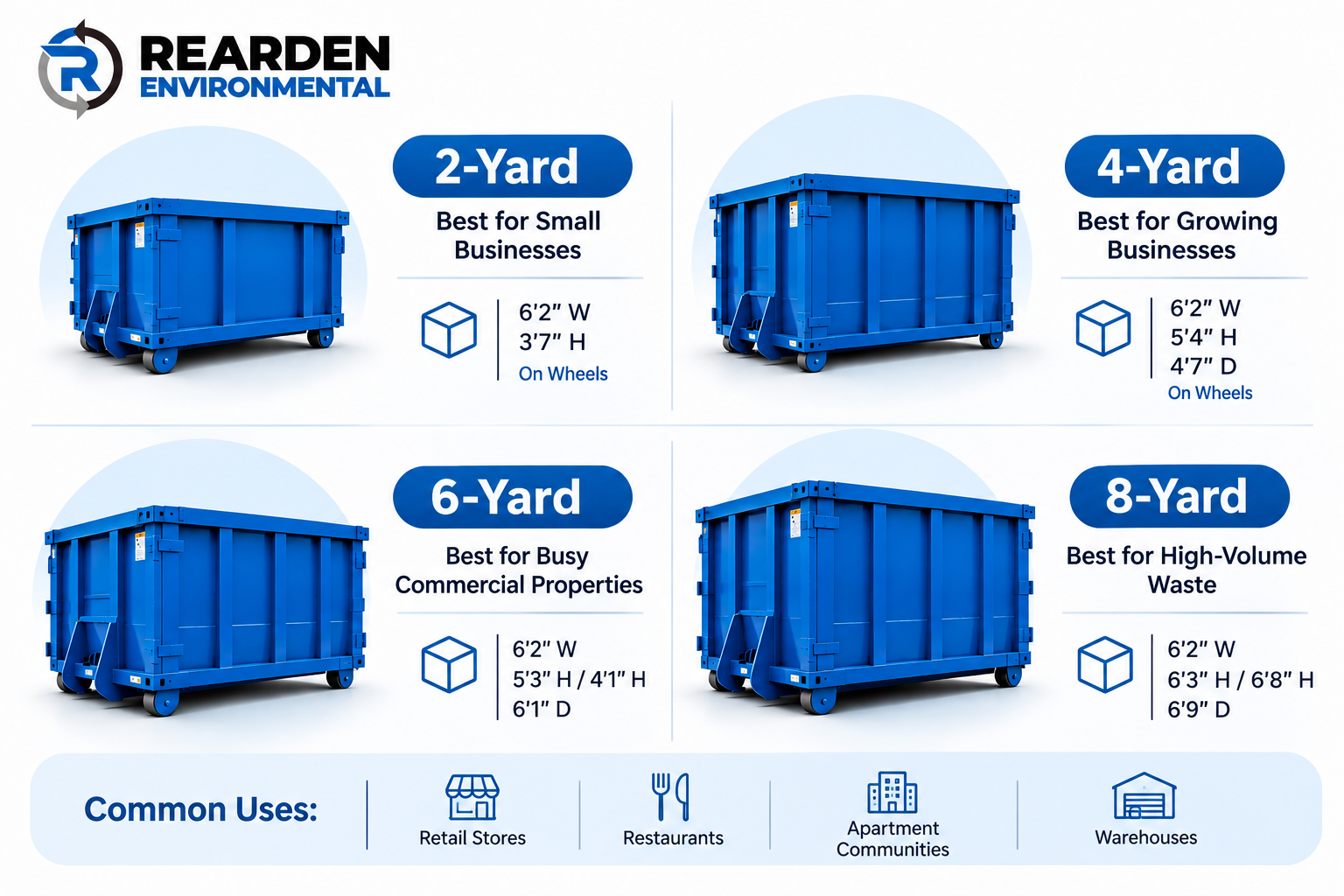
6-Yard Commercial Dumpster: Best for Busy Commercial Properties
Rearden Environmental identifies the 6-yard dumpster as its most popular commercial container size.
It’s available in two configurations.
| Configuration | Width | Height | Depth |
|---|---|---|---|
| Slant | 6’2″ | 5’3″ | 6’1″ |
| Square | 6’2″ | 4’1″ | 6’1″ |
Side doors are available on the square configuration upon request.
Common uses:
- Grocery stores
- Chain restaurants
- Apartment communities
- Larger retail properties
A 6-yard container offers substantial capacity without requiring the footprint of a large roll-off dumpster.
When to choose it: Your property produces a steady volume of waste and needs enough capacity to avoid frequent overflow.
8-Yard Commercial Dumpster: Best for High-Volume Waste
The 8-yard dumpster is the largest standard front-load container offered by Rearden Environmental.
| Configuration | Width | Height | Depth |
|---|---|---|---|
| Slant | 6’2″ | 6’3″ | 6’9″ |
| Square | 6’2″ | 6’8″ | 6’1″ |
Side doors are available on the square configuration upon request.
Common uses:
- Warehouses
- Large restaurants
- Manufacturing facilities
- High-volume commercial properties
An 8-yard container can accommodate substantial quantities of approved routine business waste.
However, its larger capacity should match actual waste generation rather than anticipated growth alone.
When to choose it: Smaller containers regularly fill before collection, and your property has sufficient space and truck access.
For more information about available configurations, explore our commercial dumpster rental services.
How to Choose Commercial Dumpster Size in 5 Practical Steps
Choosing the right dumpster involves more than estimating how many trash bags your business produces.
You also need to understand how waste accumulates between pickups.
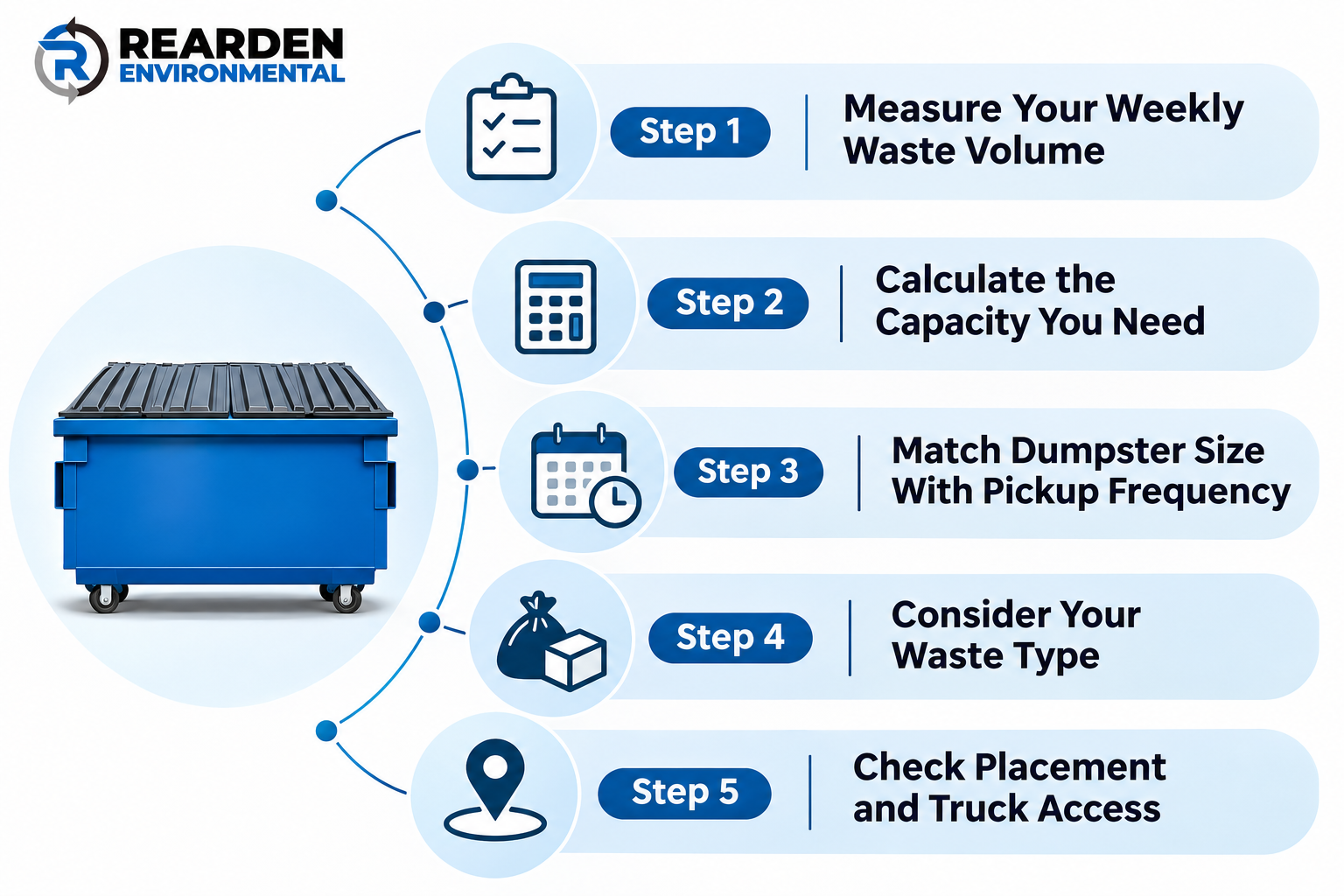
Step 1: Measure Your Weekly Waste Volume
Start by monitoring how much trash your business generates during a normal operating week.
For seven days, record:
- Number and approximate size of trash bags
- Amount of loose cardboard and packaging
- Volume of food or general business waste
- Days when waste generation is highest
- How full your existing container becomes
For a more accurate estimate, measure waste by volume rather than counting bags alone.
A 30-gallon bag has a theoretical capacity of approximately 0.15 cubic yards when completely full.
In practice, bags may contain unused space, and their shape affects how efficiently they fit inside a dumpster.
Step 2: Calculate the Capacity You Need
Use this formula:
Required container capacity = Waste generated between pickups ÷ Expected fill percentage
For example, suppose your business produces approximately 5 cubic yards of waste between scheduled collections.
If you plan to use around 80% of the container’s capacity:
5 ÷ 0.80 = 6.25 cubic yards
An 8-yard dumpster would provide sufficient nominal volume for that collection interval.
The 80% figure is a planning assumption, not a mandatory industry standard. Your actual buffer should reflect seasonal fluctuations, bulky waste, and provider loading requirements.
Step 3: Match Dumpster Size With Pickup Frequency
A smaller dumpster collected more frequently can sometimes handle the same weekly volume as a larger container collected less often.
Consider this example:
| Service Plan | Container Size | Pickups Per Week | Nominal Weekly Capacity |
|---|---|---|---|
| Option A | 4 yards | 2 | 8 cubic yards |
| Option B | 8 yards | 1 | 8 cubic yards |
| Option C | 6 yards | 2 | 12 cubic yards |
These capacities are theoretical totals. Actual usable capacity depends on how waste accumulates between pickups and whether the container can be filled safely.
The cheapest option depends on the quoted cost of the entire service plan, not just dumpster size.
For example, a restaurant might prefer smaller, more frequent collections to limit odors, while an office producing mostly dry packaging may be comfortable with a larger dumpster and fewer pickups.
Step 4: Consider Your Waste Type
Different businesses produce different types of waste.
Restaurants: Food waste, packaging, and general trash may require frequent collection.
Retail stores: Cardboard and packaging can occupy substantial space unless broken down.
Offices: Paper and light trash generally produce less dense waste.
Warehouses: Packaging, shipping materials, and approved industrial waste can accumulate quickly.
Apartment properties: Waste volume changes with occupancy, tenant turnover, and collection habits.
A dumpster suitable for a 30-person office may not be appropriate for a restaurant serving hundreds of customers.
Step 5: Check Placement and Truck Access
Before selecting a container, confirm that it can fit safely on your property.
Check:
- Available width and depth
- Space needed to open lids or side doors
- Clearance for collection vehicles
- Overhead branches, wires, and structures
- Access through gates or enclosures
- Parking and delivery restrictions
A container may fit inside an enclosure but still be difficult for the collection truck to empty.
Always confirm placement and collection access with your service provider.
How to Choose Commercial Dumpster Size for Different Businesses
The best container depends on your waste stream, not simply the size of your building.
| Business Type | Suggested Starting Size | What to Consider |
|---|---|---|
| Small office or salon | 2 yards | Light trash, low daily volume |
| Small retail store | 2–4 yards | Packaging, customer traffic |
| Mid-sized restaurant | 4–6 yards | Food waste, pickup frequency |
| Grocery store | 6–8 yards | Packaging and higher waste volume |
| Apartment community | 6–8 yards | Number of units, tenant activity |
| Warehouse | 6–8 yards | Packaging and operational waste |
| Large commercial renovation | 20–40-yard roll-off | Project debris volume and weight |
These are starting recommendations, not fixed requirements.
A busy small restaurant could generate more waste than a much larger office. Similarly, a warehouse that recycles most cardboard may need less general-trash capacity than expected.
The most reliable method is to measure waste volume and compare service plans.
How to Choose Commercial Dumpster Size for Construction Projects
Construction waste is different from routine commercial trash.
Drywall, lumber, flooring, demolition materials, and other construction debris generally require a temporary roll-off dumpster rather than a standard front-load container.
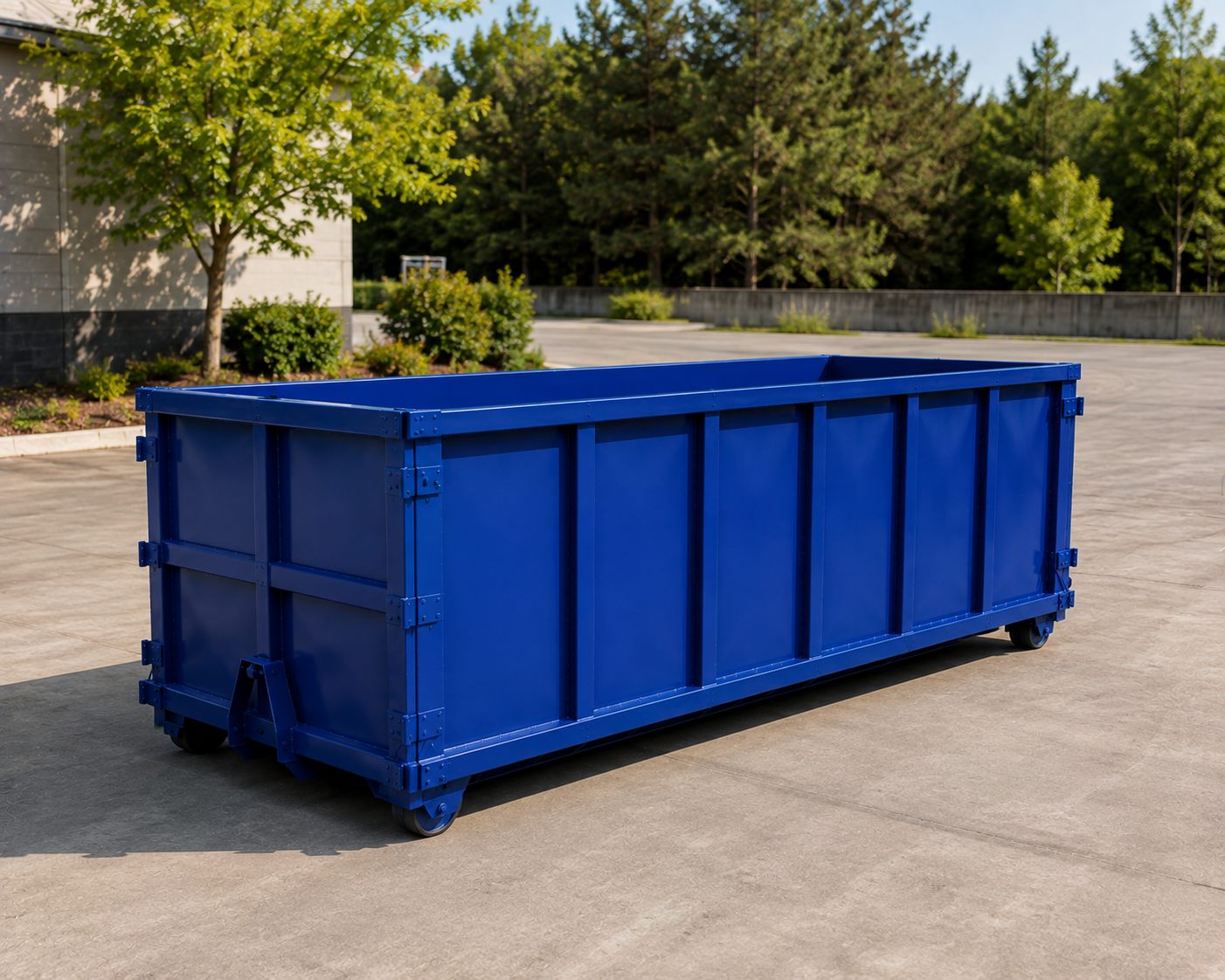
Rearden Environmental offers 10-, 20-, 30-, and 40-yard roll-off dumpsters for approved project debris.
Construction Dumpster Size Comparison
| Roll-Off Size | Nominal Capacity | Dimensions (L × W × H) | Recommended Use |
|---|---|---|---|
| 10 Yard | 10 cubic yards | 11′ × 7′ × 3.5′ | Small renovations, approved heavy debris |
| 20 Yard | 20 cubic yards | 22′ × 8′ × 4.5′ | Interior remodeling, roofing, medium cleanouts |
| 30 Yard | 30 cubic yards | 22′ × 8′ × 6.5′ | Major renovations, larger construction projects |
| 40 Yard | 40 cubic yards | 22′ × 8′ × 8′ | Large construction and commercial cleanouts |
Important: Rearden Environmental requires all-concrete and all-brick loads to use a 10-yard container. A larger dumpster is not automatically suitable for heavier materials.
Choosing Between 20- and 30-Yard Dumpsters
A 20-yard dumpster is often suitable for medium-sized renovations, while a 30-yard container offers 50% more nominal volume for larger projects.
For example, replacing flooring and cabinets in a small commercial space may fit a 20-yard container.
A more extensive renovation involving multiple rooms, drywall removal, and bulky fixtures may benefit from a 30-yard dumpster.
The final choice depends on debris type, volume, and weight requirements.
Read our guide to 20-yard dumpster dimensions and capacity for additional sizing information.
How Much Does Commercial Dumpster Rental Cost?
Commercial dumpster rental costs depend on the type of container and service arrangement.
There are two different pricing models to consider.
Recurring Commercial Dumpster Service
For 2-, 4-, 6-, and 8-yard front-load dumpsters, pricing generally depends on:
- Dumpster size
- Pickup frequency
- Waste volume and type
- Business location
- Service agreement terms
- Additional collection requirements
A business requiring three pickups per week may pay more than one using the same container with weekly collection.
Rearden Environmental provides customized commercial dumpster quotes rather than publishing a single fixed monthly price.
Temporary Roll-Off Dumpster Rental
For construction projects and major cleanouts, temporary roll-off rentals are typically priced by container size, rental duration, weight allowance, and disposal requirements.
Rearden Environmental’s published rental cost guide provides the following national ballpark estimates:
| Roll-Off Size | Typical Rental Price |
|---|---|
| 10 Yard | $300–$550 |
| 20 Yard | $400–$700 |
| 30 Yard | $500–$850 |
| 40 Yard | $600–$1,000 |
These are general roll-off rental estimates, not Rearden Environmental quotes or monthly front-load commercial service rates.
Actual costs vary by location, rental terms, and debris requirements.
For a deeper explanation, read How Much Does It Cost to Rent a Dumpster?.
How to Avoid Overpaying for Commercial Dumpster Service
The most economical waste management plan balances container capacity, collection frequency, and actual waste generation.
1. Don’t Automatically Choose the Largest Dumpster
A larger container may offer more capacity, but unused space can represent unnecessary expense.
Track your waste for at least one typical business week before deciding.
2. Compare Size and Pickup Frequency Together
Instead of asking only for the cost of a 6-yard dumpster, compare several service combinations.
For example:
- 4-yard dumpster with two weekly pickups
- 6-yard dumpster with two weekly pickups
- 8-yard dumpster with one weekly pickup
Request the total monthly cost for each option.
3. Reduce Bulky Packaging Waste
Unflattened cardboard boxes can occupy considerable space.
Breaking down boxes and separating recyclable packaging may reduce the volume of general trash.
However, recycling has its own collection requirements and costs, so compare the complete waste management plan.
4. Review Overflow and Additional Pickup Charges
An undersized dumpster can lead to overflowing trash or additional collection requests.
Ask your provider how extra pickups are priced and whether the service plan can be adjusted.
5. Review Your Waste Volume Regularly
Your needs may change with staffing, customer traffic, seasonal demand, or business expansion.
Review container fullness over time.
If the dumpster is consistently nearly empty at collection, consider a smaller container or less frequent service.
If it regularly overflows, increase capacity or collection frequency.
How to Choose Commercial Dumpster Size in Detroit, Michigan
Businesses in Detroit and surrounding Metro Detroit communities should consider local property conditions alongside waste volume.
A restaurant in downtown Detroit may have limited alley access, while a warehouse in an industrial area may have more space for a larger container.
Before scheduling commercial dumpster service, consider:
Placement restrictions: Confirm that the container can be positioned on the property without obstructing traffic, walkways, or emergency access.
Truck access: Make sure collection vehicles can reach and empty the dumpster safely.
Local requirements: If placement involves a public right-of-way, check the applicable municipal permit rules.
Seasonal changes: Winter weather and snow accumulation can affect access to outdoor waste collection areas.
Waste separation: Keep prohibited or separately managed materials out of standard commercial containers.
Rearden Environmental is based in Rochester, Michigan, and serves Metro Detroit and across the lower peninsula of Michigan.
For more information about local service options, read our commercial dumpster rental guide for Michigan.
Why Choose Rearden Environmental for Commercial Dumpster Rental?
Rearden Environmental helps businesses choose waste collection services based on their actual operating needs.
Our commercial dumpster options include:
- 2-yard containers for small businesses
- 4-yard containers for growing commercial properties
- 6-yard containers for businesses with moderate-to-high waste volume
- 8-yard containers for high-volume commercial operations
We also offer flexible collection schedules, including weekly, multiple-times-per-week, and customized service arrangements.
Our team can help you compare container sizes, plan collection frequency, and adjust service as your waste needs change.
For construction and renovation projects, we also provide roll-off dumpster rental services in 10-, 20-, 30-, and 40-yard sizes.
Need help selecting the right commercial dumpster?
Contact Rearden Environmental for a customized quote based on your waste volume, business location, and preferred collection schedule.
Call 1-855-50-TRASH
Choose the Right Dumpster, Not Just the Biggest One
Learning how to choose commercial dumpster size helps you control waste management expenses without sacrificing reliable collection.
The right container should accommodate your waste between pickups, fit your property, and support the way your business operates.
For routine commercial trash, compare 2-, 4-, 6-, and 8-yard front-load containers. For construction and major cleanouts, consider a suitable 10-, 20-, 30-, or 40-yard roll-off dumpster.
Most importantly, compare the complete service plan rather than focusing only on container size.
Rearden Environmental can help you choose a commercial dumpster and collection schedule that matches your business needs.
Get a Free Commercial Dumpster Rental Quote
Frequently Asked Questions
What Is the Typical Size of a Commercial Dumpster?
Common front-load commercial dumpsters range from 2 to 8 cubic yards. Rearden Environmental offers 2-, 4-, 6-, and 8-yard containers for routine business waste collection. The best size depends on waste volume and pickup frequency.
How Do I Know What Commercial Dumpster Size I Need?
Track your waste generation for a typical week, estimate how much accumulates between pickups, and compare available dumpster capacities. Consider waste type, collection frequency, and available placement space.
How Much Can a 20-Yard Dumpster Hold?
A 20-yard roll-off dumpster has a nominal capacity of 20 cubic yards, approximately equivalent to 6–8 pickup truckloads by volume. Actual loading capacity depends on debris type, arrangement, and weight requirements.
What’s the Difference Between a 20-Yard and 30-Yard Dumpster?
A 30-yard dumpster offers 10 additional cubic yards, or 50% more nominal volume, than a 20-yard container. Both have similar length and width in Rearden Environmental’s inventory, but the 30-yard container is taller.
Is a 4-Yard or 6-Yard Dumpster Better for a Restaurant?
A 4-yard dumpster may suit a smaller restaurant with moderate waste generation, while a 6-yard container can accommodate higher volumes. Pickup frequency is especially important for food waste, so compare both size and collection schedule.
Can I Change My Commercial Dumpster Size Later?
Yes. Rearden Environmental offers the ability to adjust dumpster size or pickup frequency as business waste needs change, subject to service arrangements and availability.
Are Commercial Dumpsters Suitable for Construction Debris?
Standard commercial front-load dumpsters are intended for routine business trash, not heavy construction debris. For remodeling, demolition, and construction projects, use an appropriate roll-off dumpster.
Is a Bigger Commercial Dumpster Always Cheaper?
No. A larger container may reduce collection frequency, but it can also increase service costs. Compare the total monthly price of different size-and-pickup combinations before choosing.
How Much Does a Commercial Dumpster Rental Cost in Michigan?
Recurring commercial dumpster pricing varies by container size, collection frequency, waste volume, service location, and agreement terms. Request a customized quote for an accurate monthly cost.