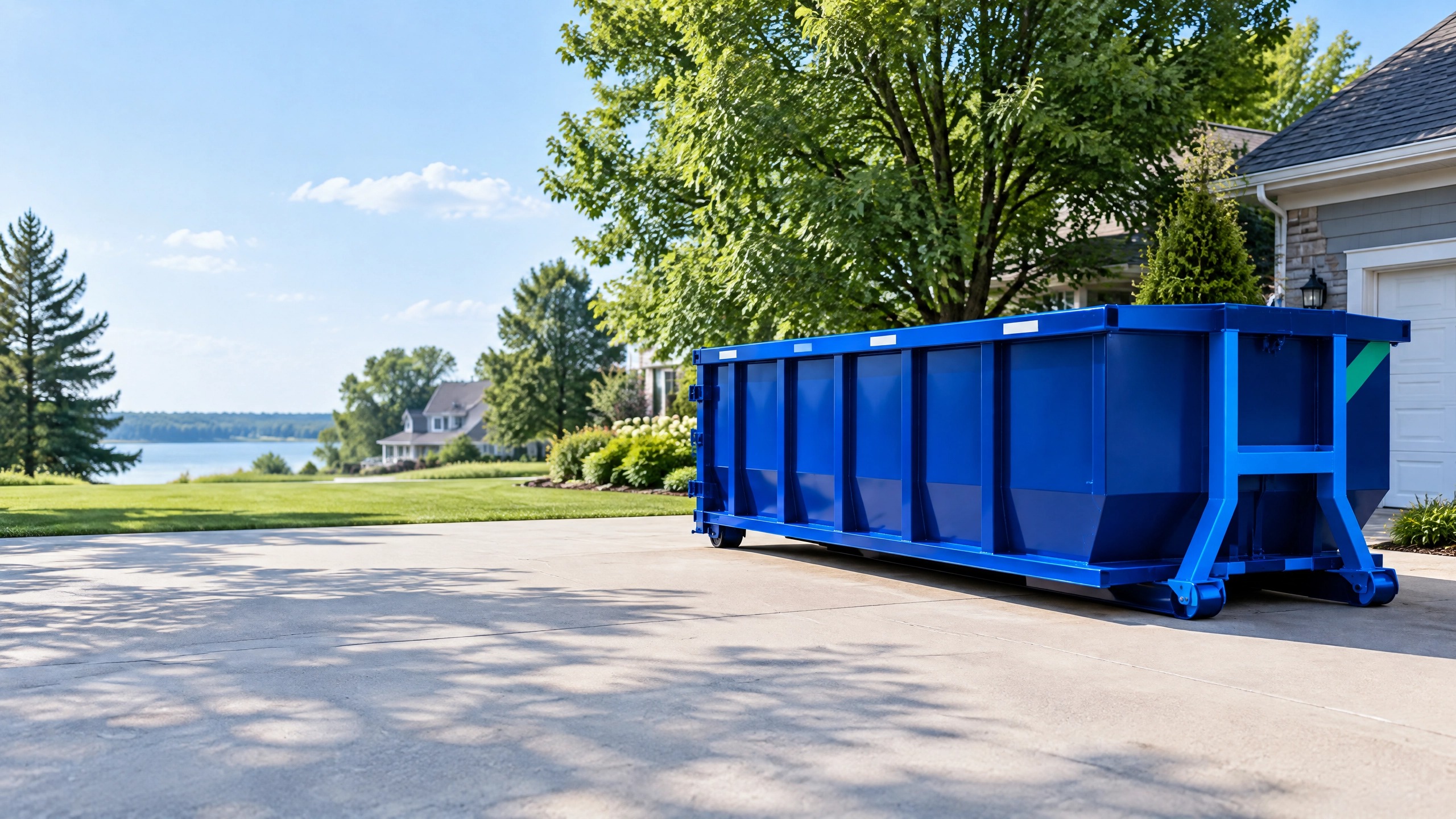
If you are staring at a garage full of old furniture, a kitchen you are about to gut, or a roof that needs to come off, one question usually comes up before any other: how big is a 20 yard dumpster, and will it actually hold everything? Asking how big is a 20 yard dumpster before you book is the smartest first step. A container that is too small means a second haul and a second bill. A container that is too big means paying for space you never use.
The 20 yard roll-off is one of the most requested sizes for a reason. It is large enough for real projects and still small enough to sit in a normal driveway. In this guide, we break down exactly how big a 20 yard dumpster is in feet, in pickup truck loads, and in everyday terms, then cover weight, driveway space, what fits, and what does not. Knowing how big is a 20 yard dumpster also helps you compare quotes fairly. We are Rearden Environmental, a locally operated company based in Rochester, Michigan, so everything here is written with Michigan homeowners and contractors in mind.
How Big Is a 20 Yard Dumpster? The Quick Answer
A 20 yard dumpster holds 20 cubic yards of material. People also search how big is a 20 cubic yard dumpster, and it is the same container. One cubic yard is a cube that measures three feet on each side, so a 20 cubic yard dumpster holds the equivalent of twenty of those cubes. In day-to-day terms, that is roughly eight pickup truck loads, or about 110 to 130 standard 33-gallon trash bags.
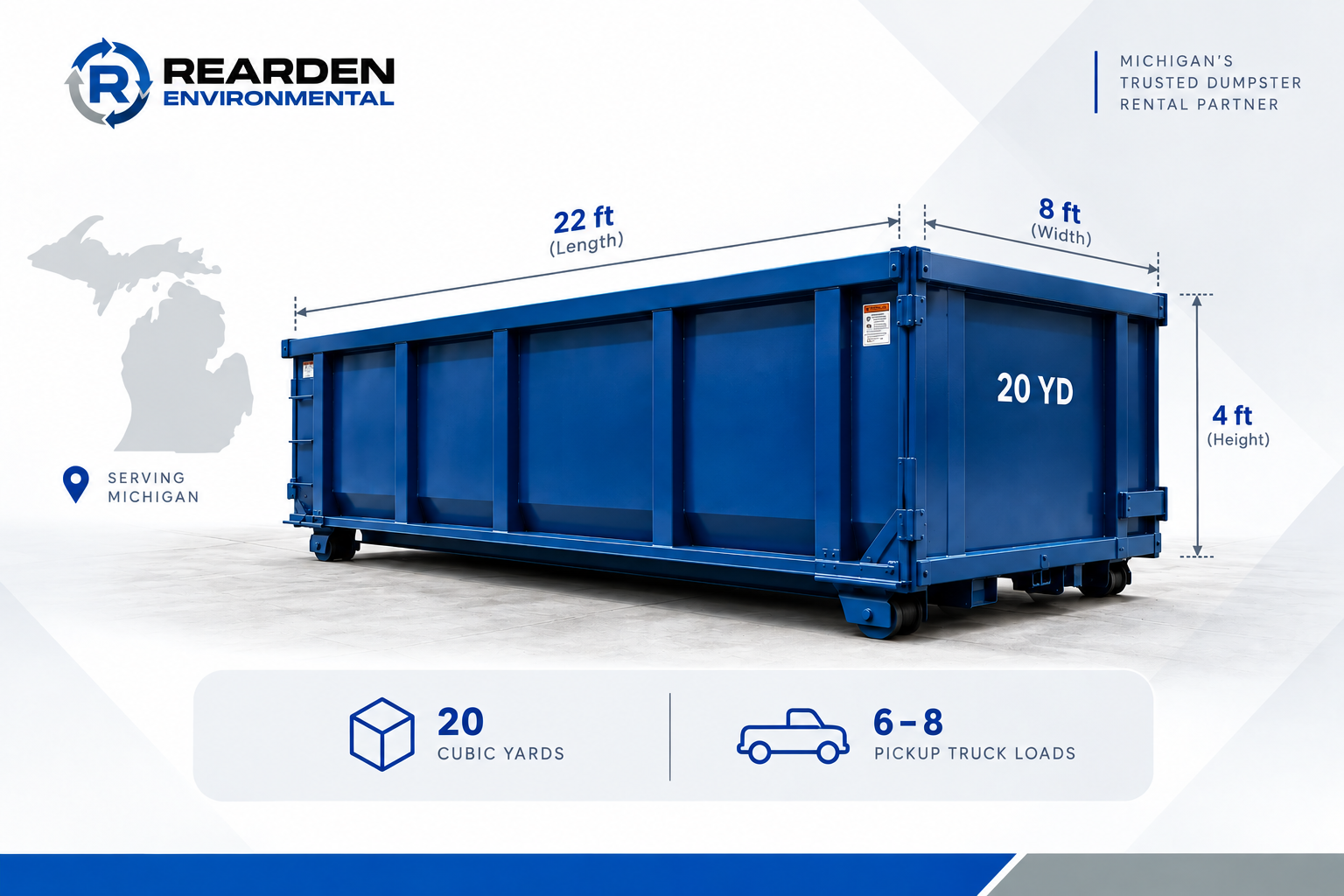
The container itself is typically about 22 feet long, 8 feet wide, and 4 feet tall. That is about the length of a pickup truck with a few extra feet on each end, and about the width of a standard parking space. The sides are tall enough that you can stack debris above the rim of your truck bed, but low enough that loading by hand remains realistic.
When people search for how big is a 20-yard dumpster, they are usually trying to answer one of three things: how much stuff it holds, how much driveway it takes up, or whether it is the right size for their project. We cover all three below, starting with the plain numbers.
How Big Is a 20 Yard Dumpster in Feet?
Let us start with the numbers most people ask for first.
Exact dimensions vary slightly by manufacturer, but a standard 20 yard roll-off looks like this:
| Measurement | Typical Size |
|---|---|
| Length | About 22 feet |
| Width | About 8 feet |
| Height | About 4 feet |
| Capacity | 20 cubic yards |
| Pickup Truck Loads | About 8 (range of 6 to 10) |
| Trash Bag Equivalent | About 110 to 130 bags (33-gallon) |
Those are outside measurements. The inside floor space and the inner wall height are a little smaller, but the capacity stays 20 cubic yards no matter which manufacturer built the container. So the answer to how big is a 20 yard dumpster in feet is the same no matter who delivers it. If you need a certain measurement for a tight spot, call us at +1-855-50-TRASH and we will confirm the exact container that will arrive at your property.
One quick note on the word “roll-off.” When you ask how big is a 20 yard roll off dumpster, you are asking about the same container. Roll-off just describes how it is delivered: a truck slides it off the back and, when you are done, rolls it back on and hauls it away.
How Big Is a 20 Yard Dumpster Compared to Pickup Truck Loads?
Most people do not think in cubic yards. They think in trips to the dump. A 20 yard container holds about eight full pickup truck loads, and some estimates run from six to ten depending on how tightly the load is stacked and how large the truck bed is. When customers ask how big is a 20 yard dumpster in real terms, this is the picture we give them. If your project would take eight or more trips in a truck, a single 20 yard rental will usually save you time, fuel, and a lot of weekends.
Here is another way to picture it:
- A full-size living room set, a couple of bookcases, and a stack of boxes, with room left over
- The old flooring from an entire main floor, plus the underlayment
- The shingles from a good portion of a typical home roof, depending on layers and size
- A deck that has been torn down and cut into manageable pieces
- The contents of a packed two-car garage
The shape of what you are throwing away matters, too. Bulky, awkward items such as couches, cabinets, and lumber leave air gaps. Breaking things down, laying flat items on the bottom, and filling the gaps with smaller debris gets you much closer to the full 20 cubic yards.

How Big Is a 20 Yard Dumpster Compared to a 10, 30, or 40 Yard?
Rearden Environmental offers roll-off dumpsters in 10, 20, 30, and 40 yard sizes. Here is how a 20 yard compares:
| Size | Typical Use | Pickup Loads (Approx.) |
|---|---|---|
| 10 yard | Small cleanouts, a single room or garage, bathroom remodels, and heavy debris like clean concrete | About 4 |
| 20 yard | Mid-size projects: flooring or roofing tear-offs, larger cleanouts, and kitchen remodels | About 8 |
| 30 yard | Big remodels and residential construction. Our most popular size | About 12 |
| 40 yard | Major construction and commercial jobs, the most capacity | About 14 to 16 |
The big difference between a 20 and a 30 yard is height. Both are usually about 22 feet long and 8 feet wide, but a 30 yard stands closer to 6 feet tall. That makes the 30 yard better for bulky demolition debris, and the 20 yard a bit easier to load by hand.
Once you know how big is a 20 yard dumpster next to the other sizes, the choice gets easier. A good rule of thumb: if you are unsure between a 10 and a 20, choose the 20. The jump in capacity is large, and it costs far less than paying for a second haul when the first container overflows. If you are unsure between a 20 and a 30, think about the type of project. Cleanouts, flooring, and roofing usually fit a 20. Whole-house renovations and additions usually call for a 30. For more help choosing, read our guide to roll-off dumpsters and how to choose the right one.

How Big Is a 20 Yard Dumpster for a Driveway or Job Site?
Knowing how big is a 20 yard dumpster on the ground is only half the job. You also need to know whether the truck can deliver it. Here is what to plan for:
Length and straight clearance. The container is about 22 feet long, but the delivery truck needs more room than that to back in and slide the container off. As a general rule, plan on a long, straight, flat stretch, roughly 60 feet if possible, in front of the spot where the container will sit.
Overhead clearance. The truck bed tilts upward during delivery and pickup. Low-hanging tree limbs, power lines, and garage door tracks can get in the way, so look up before you pick a spot.
Surface protection. A loaded dumpster is heavy. Placing boards under the container helps protect asphalt, pavers, and concrete from marks and cracks. Ask us about it when you book.
Street placement and permits. Most driveways do not need a permit. If the container will sit on the street, your city or township may require one, so check with your local office before delivery day.
Michigan weather. In winter, snow and ice can make a long driveway tricky. Clear a path before delivery and tell us about any slopes or tight turns.
Keep the pickup path clear as well. A parked car or pile of lumber in front of the container on pickup day can delay the haul-away.

How Big Is a 20 Yard Dumpster When You Factor In Weight?
Any honest answer to how big is a 20 yard dumpster has to include weight, and this is the part most size guides skip, and it is where many people get surprised. Size and weight are two different limits. A 20 yard dumpster can be full in terms of space with a modest load of light debris, or it can reach its weight allowance while it is only half full of something heavy.
Every rental includes a weight allowance. If your load goes over it, you will see an overage fee for the extra weight. You are not blocked from going over, so there is no need to panic if your project runs heavier than expected. There is, however, an extreme tonnage cap that cannot be exceeded, and your load must always stay under local and state laws and regulations so that the truck can travel safely and legally. Call us at +1-855-50-TRASH before you book if your project involves a lot of dense material, and we will help you plan.
Concrete and brick are the clearest examples. They are extremely dense, so a small amount of volume adds up to a lot of weight very quickly. Which is why we might direct those jobs to use a 10-yard container to avoid weight issues on concrete or brick.
To be clear on the rule:
- All-concrete or all-brick loads go in a 10 yard dumpster only.
- A small amount of brick mixed in with other debris may fit in a 20 yard. If your job is mostly brick or concrete, we will point you to the 10 yard.
For typical household and renovation debris, such as drywall, flooring, wood, cabinets, and furniture, a 20 yard will fill up by space long before weight becomes an issue.
How Big Is a 20 Yard Dumpster for Common Home Projects?
How big is a 20 yard dumpster for your project? The 20 yard sits in the middle of our lineup, and it covers more projects than any other size. Here is how it handles the most common jobs:
Whole-house or multi-room cleanouts. Estate cleanouts, moving out, and basement or attic purges all fit comfortably. If you are clearing a full home, you may fill it with room to spare. If the property is packed, you may want to consider a 30 yard.
Kitchen and bathroom remodels. Cabinets, countertops, flooring, drywall, and fixtures generally fit within a 20 yard. A single bathroom is usually better matched to a 10 yard.
Flooring tear-outs. Carpet, tile (as long as it is not mostly heavy masonry), laminate, and hardwood across multiple rooms.
Roofing tear-offs. A 20 yard is a popular choice for many residential roof replacements, depending on roof size and the number of shingle layers.
Deck, fence, and shed removal. Once the lumber is cut down, a 20 yard has plenty of room.
Garage and basement cleanouts. A packed garage fits well, and a smaller garage may be better served by a 10 yard.
If you are not sure, tell us what you are working on and we will recommend the right fit. Our goal is to help you avoid paying for space you will not use.
Never Mix Yard Waste and Trash
Even a perfectly sized 20 yard dumpster can cause trouble if you load it wrong. If you are tackling a yard cleanup, there is one rule that matters more than any other: yard waste and trash must never be mixed in the same container. These are the only two materials that cause major problems when combined, because yard waste is handled and processed differently from regular trash.
- A yard waste roll-off can only hold yard waste, such as branches, brush, leaves, and grass clippings.
- A trash or general debris roll-off should not have yard waste thrown in.
If you have both, the easiest solution is to book two containers, or to finish one project and then start the other. Tell us up front what you plan to put in the container, and we will make sure you get the right one.
How Big Is a 20 Yard Dumpster, and What Stays Out of It?
Size is only one part of how big is a 20 yard dumpster in practice, because what goes inside matters too. Most household junk, remodeling debris, shingles, and construction materials are fine. The items to keep out include fuels, oils, batteries, paint, tires, and other hazardous materials. If you are unsure about a specific item, just call +1-855-50-TRASH and we will help you sort it out before delivery. It is always easier to ask first than to pay to have an item removed later.
How Big Is a 20 Yard Dumpster Rental Compared With What You Actually Need?
Once you know how big is a 20 yard dumpster rental is in physical terms, the final step is matching it to your project.
Here is a simple way to turn how big is a 20 yard dumpster into a confident booking:
- Estimate your volume. Count the number of pickup truck loads your project would take. Six to ten loads points to a 20 yard.
- Think about weight. If a large share of your debris is concrete, brick, or other dense material, ask about a 10 yard instead.
- Separate your materials. Plan one container for yard waste and another for regular debris.
- Leave a little extra room. Projects almost always produce more debris than expected. If you are right on the line between two sizes, go up one.
- Check your space. Make sure the container and the delivery truck can get to the spot you have in mind.
A few habits help you get the most out of the container you rent:
- Fill in layers. Put heavy, flat items on the bottom and lighter items on top.
- Break down large items like cabinets, bed frames, and lumber.
- Do not stack debris above the top rim of the container.
- Load it evenly from front to back instead of piling everything in one corner.

How Big Is a 20 Yard Dumpster? Renting One From Rearden Environmental
If you are still wondering how big is a 20 yard dumpster for your address, we can walk you through it. Rearden Environmental is a locally operated company based in Rochester, Michigan, serving Metro Detroit and across the lower peninsula of Michigan. Whether you are in Detroit, Livonia, Troy, or Clinton Township, our team can get a 20 yard container to your property on the date you need it, usually with same-day or next-day delivery available depending on the schedule.
You can also learn more about coverage in your county:
- Dumpster rental services in Macomb County, MI
- Dumpster rental services in Monroe County, MI
- Dumpster rental services in Washtenaw County, MI
Or browse our full service areas to check your address.
A standard roll-off rental includes 7 to 10 days. If you need more time, extra days are $15 to $35 per day, and extensions are easy to arrange when you book or before pickup. For one-time projects, our roll-off dumpster rental services cover cleanouts, remodels, roofing, and construction in 10, 20, 30, and 40 yard sizes.
If you run a business, we also offer:
- Commercial dumpster rental service for ongoing trash pickup at offices, restaurants, retail, and warehouses
- Compactor solutions for high-volume sites that want fewer pickups
- Commercial recycling services for businesses that want to divert material from the landfill
Ready to Rent a 20 Yard Dumpster?
Now you know how big is a 20 yard dumpster, how much it holds, and how to choose the right size for your project. If you still have questions, our team is happy to help you pick the right container and plan delivery. Call us at +1-855-50-TRASH or request a free quote and we will get your project moving.
Frequently Asked Questions: How Big Is a 20 Yard Dumpster?
How big is a 20 yard dumpster in cubic yards?
How big is a 20 yard dumpster? It holds 20 cubic yards of material. That is roughly eight pickup truck loads, or about 110 to 130 standard 33-gallon trash bags.
Is a 20 yard dumpster big enough for a kitchen remodel?
Yes, in most cases. A 20 yard handles cabinets, countertops, flooring, and drywall with room to spare. For a very large kitchen or a full gut renovation, ask us about a 30 yard.
Will a 20 yard dumpster fit in my driveway?
In most cases, yes. When you ask how big is a 20 yard dumpster, remember the truck needs room too. A 20 yard is about 22 feet long and 8 feet wide, and the delivery truck needs a long, straight approach and overhead clearance. Tell us about your driveway when you book.
Can I go over the weight limit?
Yes. If your load goes over the included weight allowance, an overage fee applies to the extra weight. There is an extreme tonnage cap that cannot be exceeded, and your load must stay under local and state laws and regulations.
Can I put concrete or brick in a 20 yard dumpster?
All-concrete and all-brick loads go in a 10 yard dumpster only. A small amount of brick mixed with other debris may fit in a 20 yard, but if your job is mostly brick or concrete, we will direct you to the 10 yard.
Can I mix yard waste and trash?
No. Yard waste and trash must never be mixed in the same container. A yard waste roll-off holds only yard waste.
Do I need a permit for a 20 yard dumpster?
If the dumpster sits on your own driveway, you usually do not need one. If it will be placed on the street, check with your city or township.
How long can I keep the dumpster?
Our standard roll-off rental includes 7 to 10 days. Extra days are $15 to $35 per day.