A commercial dumpster rental gives a business a dependable place to collect ordinary, non-hazardous waste and arrange service around its operating schedule. A well-planned commercial dumpster rental can help keep a retail property, restaurant, office, apartment community, warehouse, or other commercial site cleaner and easier to manage.
The right setup is not simply the biggest container available. A practical commercial dumpster rental decision considers the type of waste your business produces, how quickly the container fills, how often it should be serviced, where it can be placed, and whether a front-load dumpster, temporary roll-off, compactor, or recycling solution makes the most sense.
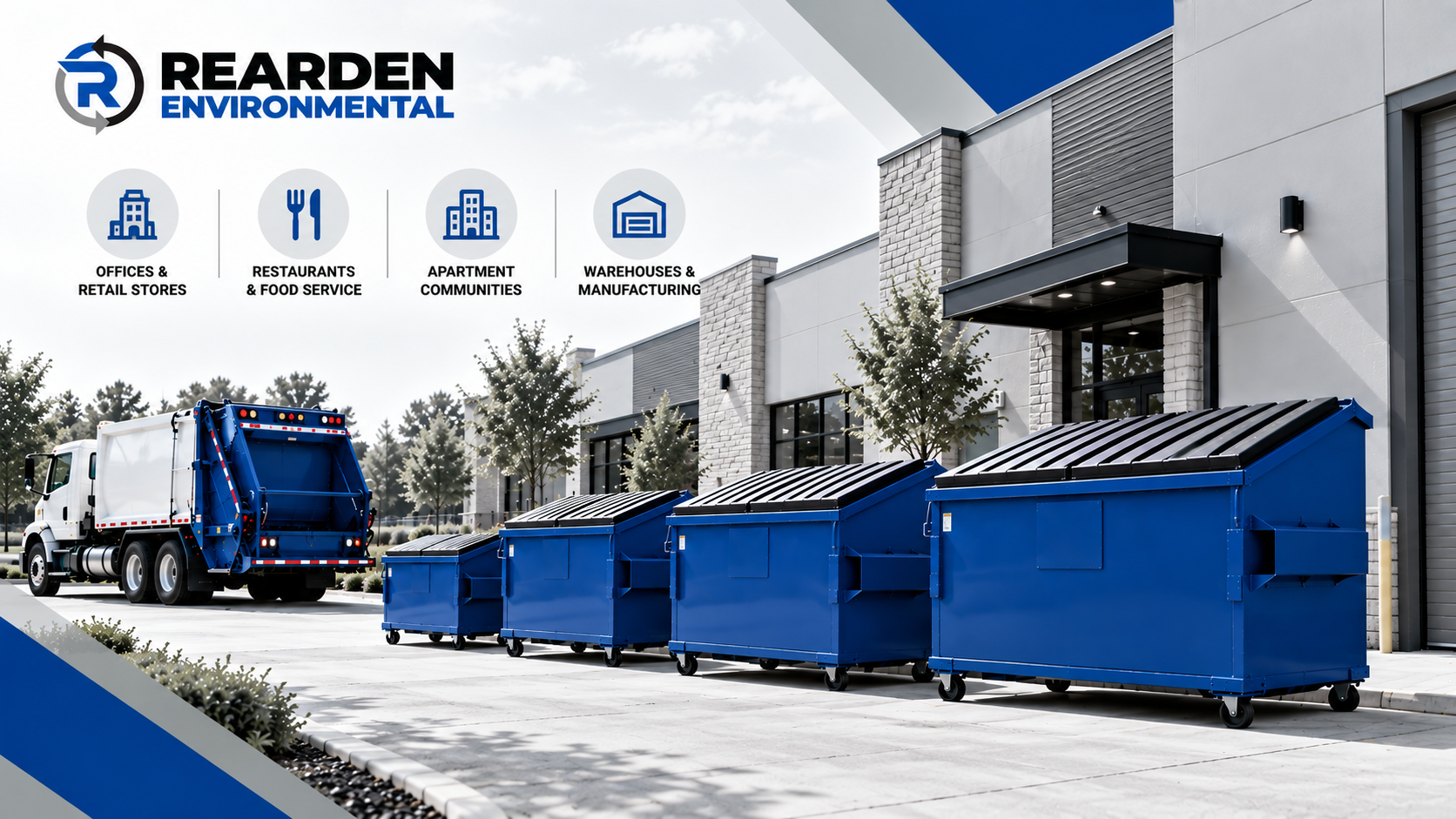
Rearden Environmental is a locally operated company based in Rochester, Michigan, serving Metro Detroit and across the lower peninsula of Michigan. Its commercial service includes 2-, 4-, 6-, and 8-yard front-load dumpsters for offices, restaurants, retail stores, apartment communities, warehouses, manufacturing facilities, and other commercial properties. Learn about Rearden’s commercial dumpster service before requesting a quote.
This guide explains how commercial dumpster service works, how to choose a container, what affects your quote, and when another waste solution may be more appropriate.
What Is Commercial Dumpster Rental?
Commercial dumpster rental is a recurring waste-collection service designed for businesses and other properties that generate waste as part of their normal operations. Unlike a temporary container used for a one-time home cleanout or remodeling project, a commercial dumpster is generally placed at the property and serviced on an agreed schedule.
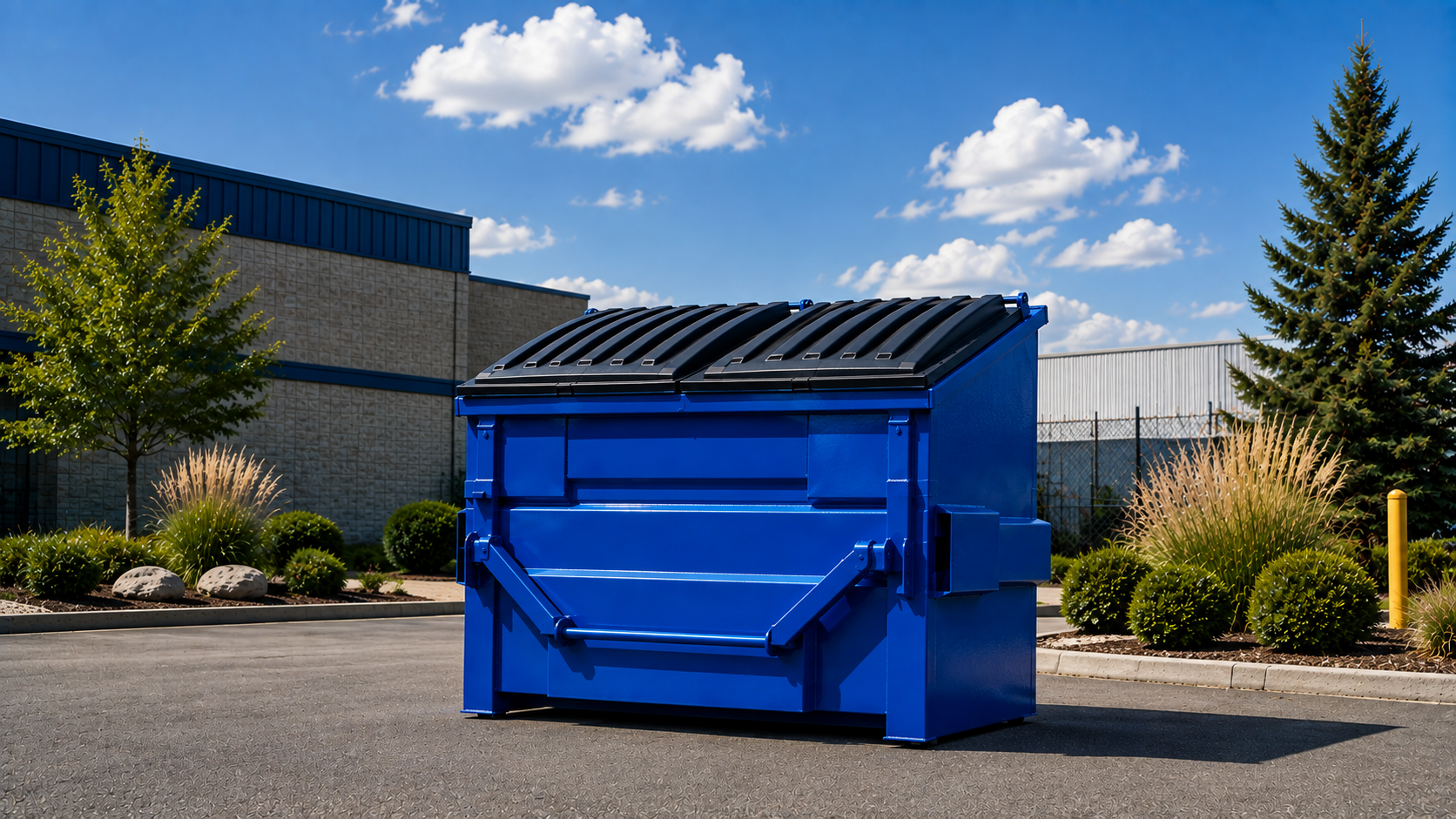
A front-load container is a common choice for everyday business waste. It is positioned in an accessible service area and emptied by a collection truck. The service plan is built around the amount of waste produced between pickups rather than the size of the building alone.
For example, a small office may produce a modest amount of paper, packaging, and general trash. A restaurant may fill a container much faster because of daily food-service operations. A grocery store, apartment community, or distribution facility may need more capacity, a different container arrangement, or a higher pickup frequency.
Commercial dumpster rental is therefore a combination of container capacity and collection planning. If the container is too small or pickups are too infrequent, waste can accumulate outside the bin. If the container is much larger than necessary, the business may pay for capacity it does not use. Rearden can help match the container and schedule to the actual waste stream.
Commercial Dumpster Rental vs. Residential Dumpster Rental
The main difference is the service model. Residential dumpster rental is often temporary and connected to a defined project such as a garage cleanout, roof replacement, renovation, or demolition. Commercial dumpster rental is usually intended for ongoing business operations and scheduled collection.
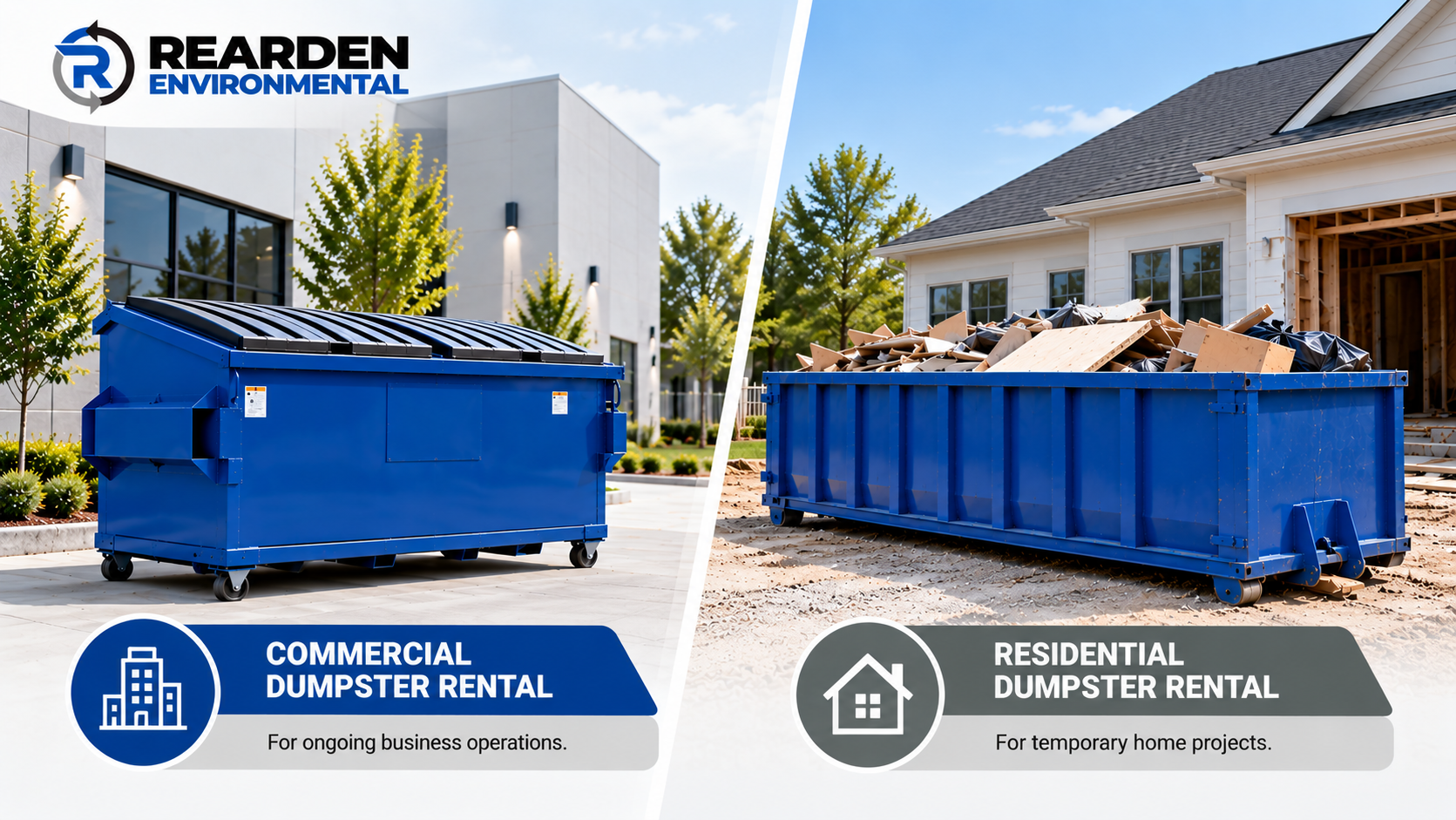
A business may need both types at different times. A retail store might use a front-load container for everyday cardboard and general trash, then order a temporary roll-off dumpster during a store remodel. A property manager might use recurring service for apartment waste and a roll-off for a large unit cleanout or renovation.
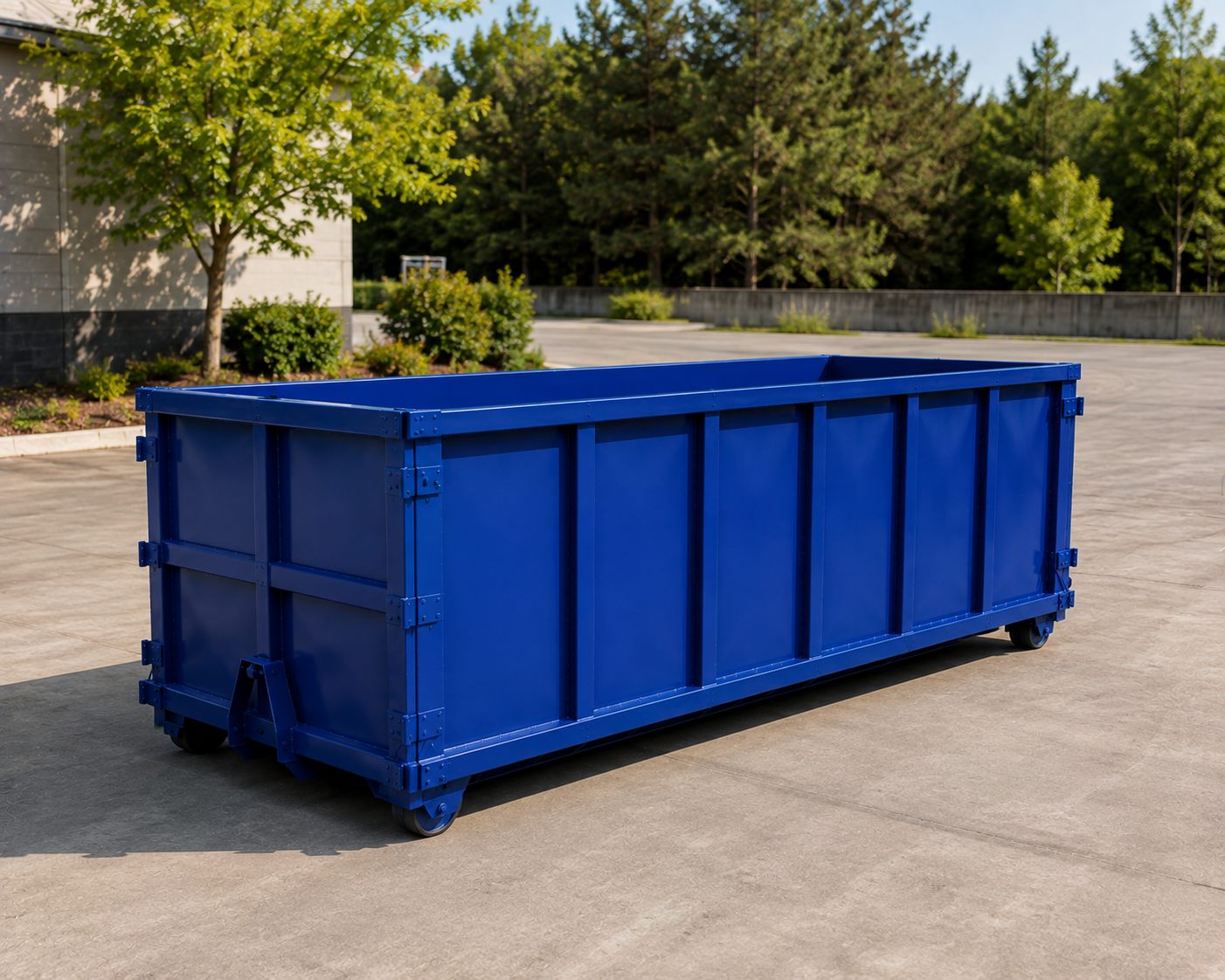
For a temporary construction, demolition, roofing, or large cleanout project, Rearden’s roll-off dumpster rental service offers 10-, 20-, 30-, and 40-yard containers. The size and service type should match the project instead of being chosen by habit.
Commercial Dumpster Rental Sizes: 2, 4, 6, and 8 Yards
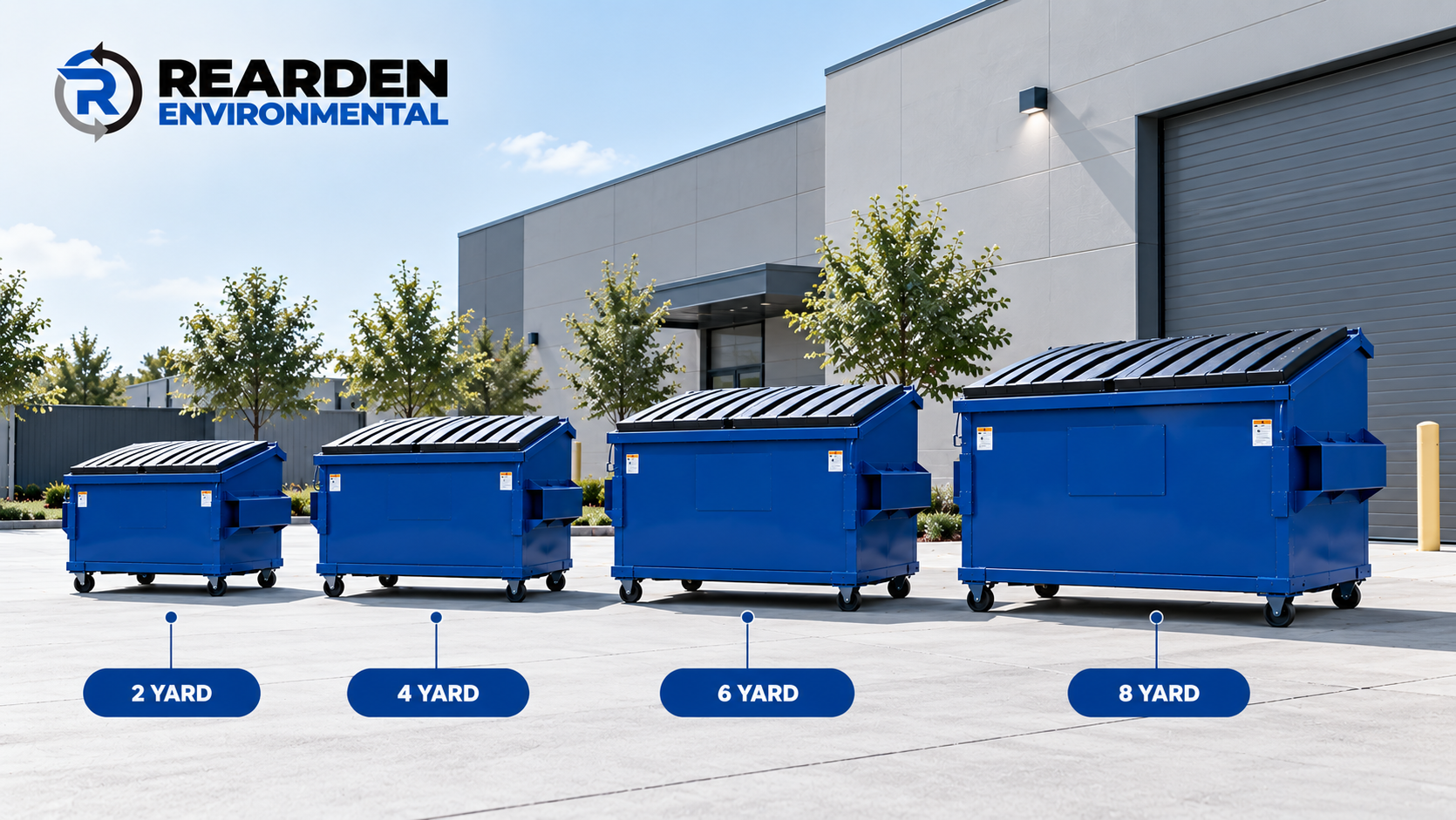
Rearden’s commercial dumpster sizes are designed for different waste volumes and property layouts. Dimensions and availability vary by container format, so the following information is a planning guide rather than a substitute for a site-specific recommendation.
2-Yard Commercial Dumpster
The 2-yard container is Rearden’s smallest commercial option. It takes up less space and may suit a small office, salon, boutique, or other lower-volume business. It can be useful where the service area is tight and the business produces a limited amount of ordinary waste between pickups.
4-Yard Commercial Dumpster
A 4-yard commercial dumpster can work for a growing business, a small-to-medium retail space, a restaurant, or a gas station. It provides more capacity than the smallest option without requiring the footprint of a larger container.
6-Yard Commercial Dumpster
The 6-yard container is Rearden’s most popular commercial size. It may fit grocery stores, chain restaurants, apartment communities, and larger retail spaces. Rearden’s service page lists both slant and square formats for this size, with side doors available in the square format upon request.
8-Yard Commercial Dumpster
An 8-yard commercial dumpster is designed for higher-volume operations such as warehouses, large restaurants, and manufacturing facilities. Rearden lists slant and square formats, with side-door options available in the square format upon request.
These commercial dumpster sizes are starting points. The best choice depends on how much waste is generated, the number of days between collections, the available access area, and the type of material being discarded.
How to Choose the Right Commercial Dumpster Rental Size
Start with actual waste patterns rather than guessing from employee count or square footage. Review how many bags, boxes, or containers your business produces on a typical day and how many days pass between pickups.
Ask these questions before choosing a commercial dumpster rental:
- Does the container regularly fill before the scheduled pickup?
- Does the lid close properly at the end of the service period?
- Are employees placing bags or boxes beside the container?
- Is the container consistently less than half full when it is serviced?
- Does the business experience seasonal, holiday, event, or inventory-related increases?
- Is the waste mostly general trash, packaging, cardboard, food waste, or another material?
- Can the collection truck reach the container safely and consistently?
If waste is overflowing before pickup, the answer may be a larger container, more frequent service, or both. If substantial empty space remains every time, a smaller container or less frequent collection may be more efficient.
The building itself is not a reliable sizing formula. Two businesses with the same square footage can generate very different amounts of waste. A small restaurant may produce more daily waste than a larger professional office, while a warehouse may generate mostly cardboard and packaging that could be handled through a different waste or recycling plan.
For project debris, a commercial roll-off may be more appropriate than a recurring front-load container. Rearden’s commercial dumpster rental service and roll-off dumpster service cover different operational needs, so explain the project and waste stream when requesting a quote.
What Can Go in a Commercial Dumpster?
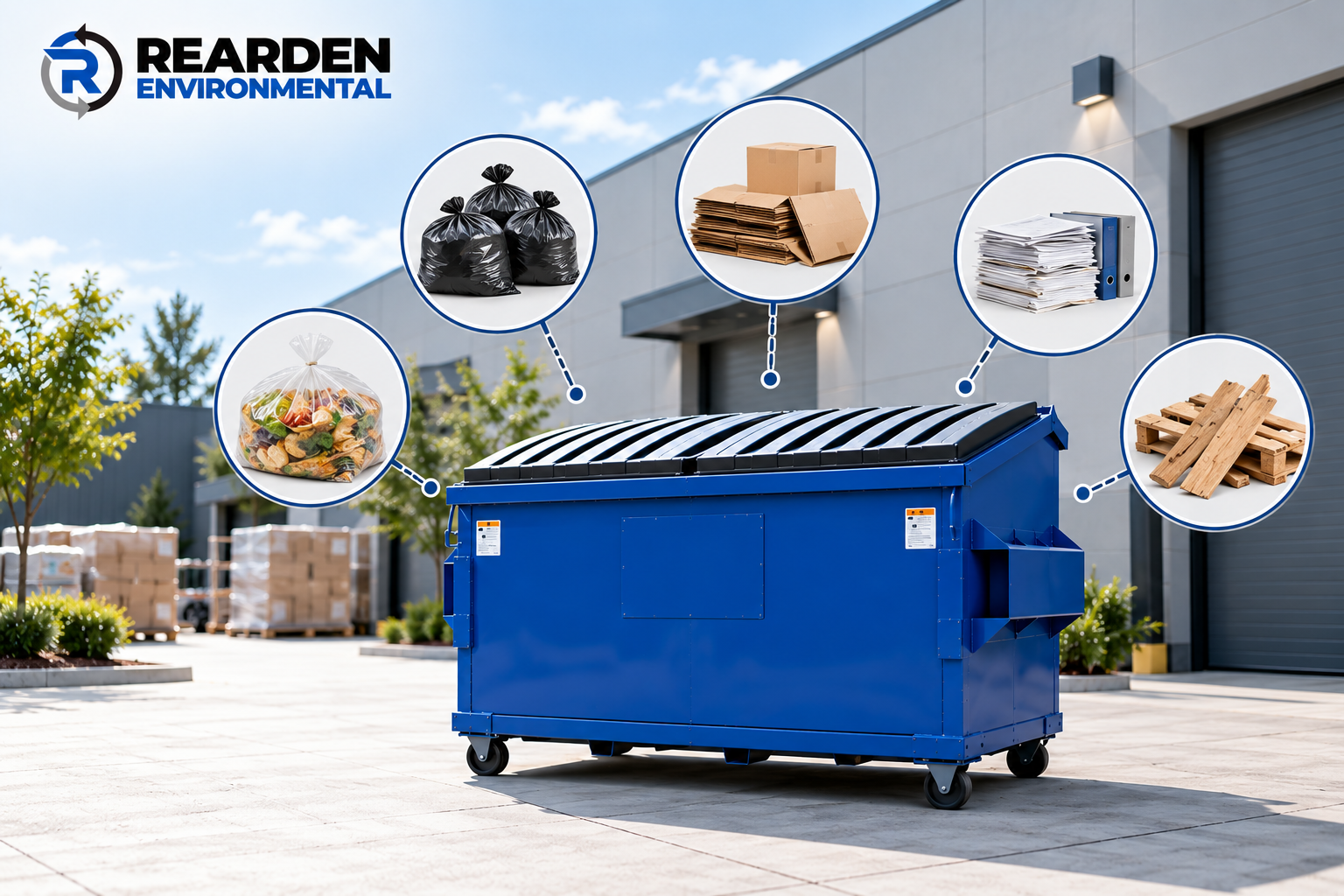
Rearden’s commercial containers are intended for everyday, non-hazardous business waste. Depending on the service arrangement, this can include general trash, bagged food waste from restaurants and food-service businesses, cardboard, paper packaging, shipping boxes, office paper, files, and other ordinary non-electronic office waste.
Material rules matter because a commercial dumpster is not a universal disposal container. Before loading an unusual material, contact Rearden and confirm that it is accepted under the service agreement and disposal requirements.
Hazardous materials and regulated waste should not be placed in a standard commercial container. Batteries, electronics, appliances, large equipment, chemicals, flammable materials, and other materials requiring special handling may need a different disposal route. Do not assume that an item is acceptable simply because it is common in a workplace.
Yard waste and trash must never be mixed in the same container. A yard-waste roll-off can only hold yard waste, while a trash container should be used for the waste stream it was assigned to. Mixing yard waste and trash can create major disposal and service problems.
If a business is renovating, removing concrete, handling brick, or generating construction and demolition debris, describe the material before ordering. All-concrete and all-brick loads belong in a 10-yard dumpster because of their weight. A small amount of brick removal may fit in a 20-yard container when mixed with other materials, but all-brick and all-concrete jobs should be planned for a 10-yard container to avoid weight issues. Loads also need to stay under local state laws and regulations; an included weight allowance does not override legal road limits.
Commercial Dumpster Rental Pickup Schedules
A pickup schedule should reflect how quickly the business fills its container. A low-volume office may need a different schedule from a restaurant, apartment community, grocery operation, or manufacturing facility.
Watch what happens during a normal service cycle. If the container is full several days before pickup, bags are accumulating outside, odors are increasing, or the lid cannot close, the schedule or container size may need to change. If the container is nearly empty at every pickup, the business may be paying for unused capacity.
Seasonality also matters. Restaurants may have changes in volume during holidays or events. Retailers may generate additional packaging during busy periods. Apartment properties may see changes during move-in and move-out seasons. Warehouses can experience spikes during inventory changes or shipping cycles.
Rearden provides flexible pickup frequencies and scheduled waste collection for commercial properties throughout Michigan. Ask about the service pattern that fits your operating needs rather than choosing a schedule without reviewing the waste stream.
Commercial Dumpster Rental Pricing: What Affects a Quote?
There is no single commercial dumpster rental price for every Michigan business. The quote depends on the service location, container size, waste volume, material type, pickup frequency, access conditions, and any additional requirements.
When comparing commercial dumpster pricing, ask whether the quote explains:
- The container size and format.
- The planned pickup frequency.
- Delivery and pickup terms.
- Disposal and service charges.
- Any material restrictions.
- What happens if the business needs a different size or schedule.
- Whether difficult access, blocked gates, or placement changes affect service.
A low advertised price may not represent the final cost if it excludes important service details. For temporary roll-off work, ask about the extra rental-day fee; Rearden’s applicable extra-day charge is $15 to $35 per day. A clear quote helps a business budget for recurring waste collection and compare providers on the same terms.
Rearden emphasizes transparent pricing and a local team that can discuss the property, waste stream, and service needs directly. Request a quote for the actual business address and explain the expected waste volume before selecting a container.
Commercial Dumpster Rental or Compactor?
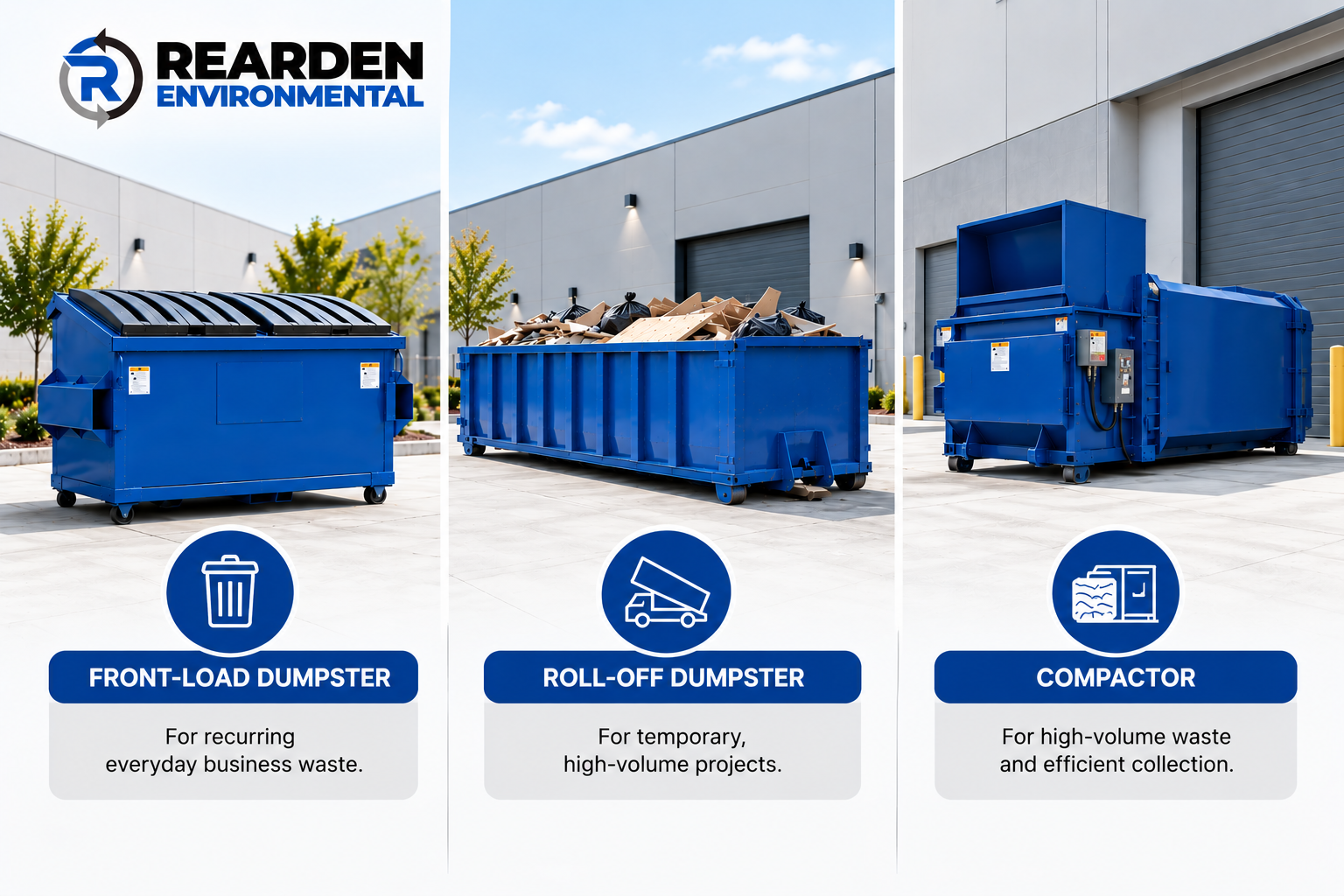
A front-load dumpster is usually the best starting point for recurring everyday business waste. It stays at the property and is serviced on a planned route.
A commercial roll-off dumpster is better for temporary, high-volume work such as construction, demolition, roofing, renovation, or a large property cleanout. It is an open-top container delivered for a project and removed when the work is complete.
A commercial compactor may be appropriate when a business generates enough waste that frequent hauling is inefficient. Compaction reduces the volume of certain waste streams and can help improve site cleanliness and collection logistics.
Rearden offers compactor solutions that include self-contained and stationary compactors. Self-contained compactors combine the compactor and container in one sealed unit and may suit wet waste from restaurants, grocery stores, hospitals, and food-processing facilities. Stationary compactors stay fixed while compacted material is collected in a detachable receiver box and may suit dry waste from warehouses, distribution centers, manufacturing facilities, and retail stores.
A business should not select a compactor solely because it sounds more advanced. The decision should consider waste type, available space, access, volume, loading method, hauling frequency, and the equipment arrangement that fits the property.
Commercial Dumpster Rental and Recycling
A commercial dumpster rental can be part of a broader waste-management plan rather than the only solution. Businesses that generate large amounts of cardboard, paper, packaging, or other recyclable materials may benefit from separating those materials from general waste.
Rearden also provides commercial recycling services. Separating recyclable materials can help a business organize its waste stream, reduce the amount sent as general trash, and keep cardboard or packaging from consuming capacity in the main container.
Recycling should be planned around the materials actually generated at the property. Ask Rearden which materials can be handled through the available service and how containers should be placed and labeled.
Commercial Dumpster Rental Placement and Access
The container must be placed where the collection truck can reach it safely. Keep the service area clear of parked vehicles, locked gates, construction materials, low branches, and other obstacles. Employees and contractors should know not to block the access route on pickup day.
A commercial property should also think about the relationship between the dumpster and daily operations. The container should be convenient for staff while remaining away from customer traffic, loading zones, emergency access, and areas where leaks or odors could create a problem.
For temporary roll-off projects, the delivery area needs enough room for the truck to place and retrieve the container. Rearden’s guide on where to place a dumpster explains practical placement considerations. If the container must be placed on a public street or sidewalk, check local requirements before delivery; private-property placement may have different rules.
How to Start Commercial Dumpster Rental Service
The process is straightforward when the business has its basic information ready.
First, describe the property and the waste stream. Tell Rearden whether the service is for an office, restaurant, retail store, apartment community, warehouse, manufacturing facility, construction project, or another operation.
Second, estimate the normal waste volume and explain how often the container fills. If the business is replacing an existing provider, gather recent service information if available. If the service is new, photographs or a clear description of the waste area can help with planning.
Third, discuss container size, placement, pickup frequency, accepted materials, and access requirements. If the property produces food waste, cardboard, construction debris, or unusually heavy materials, mention it before the service begins.
Fourth, review the quote and service terms. Confirm the container, schedule, included services, material rules, and contact process for changes. Rearden’s how-to-rent-a-dumpster guide provides additional planning guidance.
Finally, keep the service area accessible and contact the local team if waste volume changes. A commercial dumpster rental should adapt as the business grows, changes its operations, or experiences seasonal demand. Reviewing the commercial dumpster rental plan periodically can prevent overflow and unused capacity.
Rearden’s Michigan Commercial Dumpster Rental Service Area
Rearden Environmental is based in Rochester, Michigan, serving Metro Detroit and across the lower peninsula of Michigan. Its service-area pages include locations such as Wayne County, Macomb County, Oakland County, and Washtenaw County.
Businesses in Detroit, Livonia, Troy, Clinton Township, and surrounding Michigan communities can contact Rearden to confirm service availability at the property. Coverage, container options, and pickup schedules can depend on the exact address and operational requirements.
Commercial Dumpster Rental: Final Takeaway
The best commercial dumpster rental is the one that fits the business’s waste stream, property, service schedule, and operating needs. A small office, restaurant, retail store, apartment community, warehouse, and construction site may all require different solutions.
Begin with the material being discarded and the amount generated between pickups. Then compare front-load service, temporary roll-off capacity, compactors, and commercial recycling where appropriate. Rearden Environmental’s local team can help businesses across Michigan choose a practical setup, arrange delivery and pickup, and adjust the plan as the operation changes.
Frequently Asked Questions About Commercial Dumpster Rental
What is the best commercial dumpster size for a small business?
A 2-yard or 4-yard container may suit a lower-volume office, salon, boutique, or small retail business. The right choice depends on how much waste is generated between pickups and how much space is available.
How often should a commercial dumpster be emptied?
The correct schedule depends on the business’s waste volume and the container size. A restaurant, apartment community, grocery store, or high-volume retail operation may need more frequent service than a small office. Overflow or large amounts of unused space are signs that the plan should be reviewed.
Can a commercial dumpster be used for a construction project?
Temporary construction, demolition, roofing, and renovation work generally calls for a commercial roll-off dumpster rather than a recurring front-load container. Rearden offers 10-, 20-, 30-, and 40-yard roll-off options for different project sizes.
Can I put food waste in a commercial dumpster?
Rearden’s commercial service page lists bagged food waste from restaurants and food-service businesses among accepted examples. Confirm the specific service terms before loading food waste, especially if the material is wet, leaking, or mixed with other waste streams.
Can yard waste and trash go in the same dumpster?
No. Yard waste and trash must never be mixed in the same container. A yard-waste roll-off can only hold yard waste, while ordinary trash belongs in the appropriate trash container.
When should a business consider a compactor?
A compactor may make sense when the business generates high waste volumes and frequent hauling is inefficient. Rearden offers self-contained and stationary compactor solutions for different wet and dry commercial waste streams.
How do I get commercial dumpster pricing?
Request a quote for the actual business address and describe the container size, waste type, expected volume, access conditions, and preferred pickup schedule. Those details help Rearden provide a more useful service recommendation and quote.