Not every dumpster is built for the same job. The container behind a restaurant is designed for regular trash collection, while the large open-top dumpster at a construction site is meant to handle substantial amounts of debris.
Understanding the different types of dumpsters helps you choose the right container, avoid disposal problems, and manage rental costs.
The main types of dumpsters include roll-off, front-load, rear-load, and compactor dumpsters. Each serves a different purpose, from home renovations and construction to everyday commercial waste collection.
This guide compares their sizes, uses, costs, and rental requirements so you can decide which dumpster makes sense for your project or business.
What Are the Different Types of Dumpsters?
There are four main dumpster categories, distinguished by their design, collection method, and intended use.
| Dumpster Type | Common Sizes | Best For | Service Type |
|---|---|---|---|
| Roll-Off Dumpster | 10–40 yards | Home cleanouts, remodeling, construction | Temporary or project-based |
| Front-Load Dumpster | 2–8 yards | Restaurants, offices, retail, apartments | Recurring collection |
| Rear-Load Dumpster | 2 & 4 yards | Businesses with compatible collection access | Recurring collection |
| Compactor Dumpster | Varies by equipment | High-volume commercial and industrial waste | Ongoing or specialized |
Sizes and configurations vary by provider. Rearden Environmental offers roll-off and front-load dumpsters, along with separate compactor solutions.
The biggest difference between these types of dumpsters is how they’re emptied.
A roll-off dumpster is transported to a disposal facility with its contents. A front-load or rear-load container is generally emptied into a collection truck and returned to its position.
Compactors use mechanical pressure to reduce waste volume before collection.
1. Roll-Off Dumpsters: Best for Renovations, Cleanouts & Construction
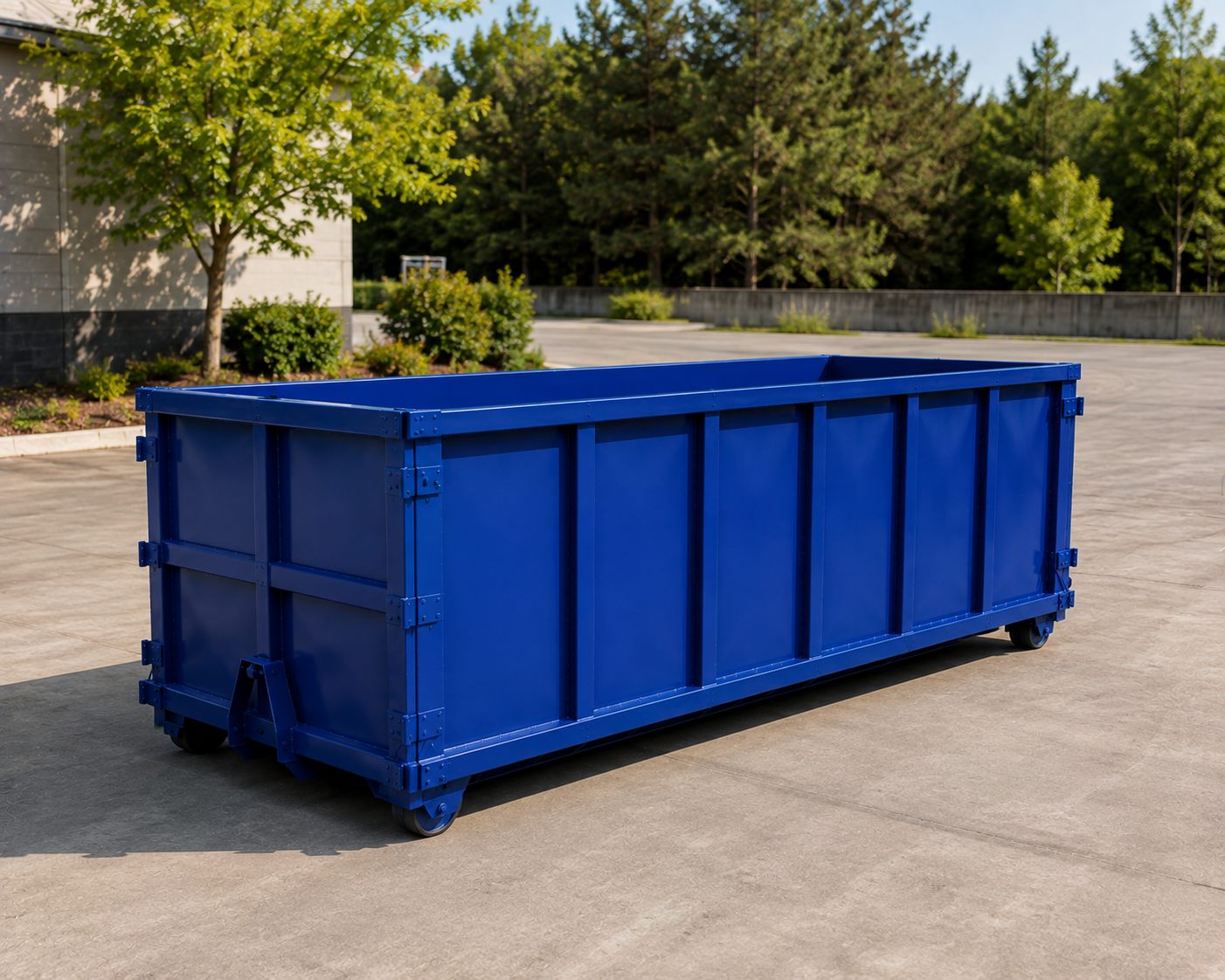
Roll-off dumpsters are large, typically open-top containers delivered by specialized trucks. They are commonly used when a project produces more waste than ordinary trash collection can handle.
Unlike recurring commercial dumpsters, roll-offs are often rented for a defined period and removed once the cleanup is complete.
Common uses include:
- Garage, basement, and estate cleanouts
- Kitchen and bathroom remodeling
- Roofing and flooring replacement
- Construction and demolition
- Commercial property renovations
- Large-scale approved debris removal
Types of Roll-Off Dumpsters by Size
Rearden Environmental offers four roll-off container sizes.
| Roll-Off Size | Dimensions (L × W × H) | Approx. Pickup Loads | Best For |
|---|---|---|---|
| 10 Yard | 11′ × 7′ × 3.5′ | 3–4 | Small cleanouts, minor renovations, designated heavy debris |
| 20 Yard | 22′ × 8′ × 4.5′ | 6–8 | Kitchen remodeling, roofing, medium cleanouts |
| 30 Yard | 22′ × 8′ × 6.5′ | 9–12 | Major renovations, construction projects |
| 40 Yard | 22′ × 8′ × 8′ | 12–16 | Large construction and commercial cleanups |
Pickup truckload equivalents are approximate volume comparisons, not weight allowances.
10-Yard Roll-Off Dumpster
A 10-yard dumpster is the smallest roll-off option offered by Rearden Environmental.
Its compact dimensions make it useful for minor renovations, garage cleanouts, and projects with limited placement space.
It’s also the required container for all-concrete and all-brick loads under Rearden Environmental’s material requirements.
For more information, read our 10-yard dumpster size and capacity guide.
20-Yard Roll-Off Dumpster
A 20-yard dumpster provides twice the nominal capacity of a 10-yard container.
It’s a versatile choice for kitchen renovations, medium-sized property cleanouts, roofing work, and approved mixed construction debris.
Its larger footprint requires sufficient driveway or job-site space.
Explore our guide to 20-yard dumpster dimensions and uses to understand what fits.
30-Yard Roll-Off Dumpster
A 30-yard dumpster offers additional capacity for major renovations, residential construction, and larger commercial cleanouts.
It’s especially useful when the project produces bulky materials such as cabinets, drywall, and lumber.
However, its greater volume doesn’t make it suitable for unlimited heavy debris.
40-Yard Roll-Off Dumpster
A 40-yard dumpster is designed for high-volume projects, including major construction, industrial cleanouts, and large commercial renovations.
It’s the largest standard roll-off size offered by Rearden Environmental.
Before renting one, confirm the available placement space, truck access, and debris requirements.
Best choice: If your project has a defined beginning and end and generates substantial debris, a roll-off dumpster is usually the most suitable category.
Explore Rearden Environmental’s roll-off dumpster rental services for available sizes and rental options.
2. Front-Load Dumpsters: Best for Weekly Commercial Waste
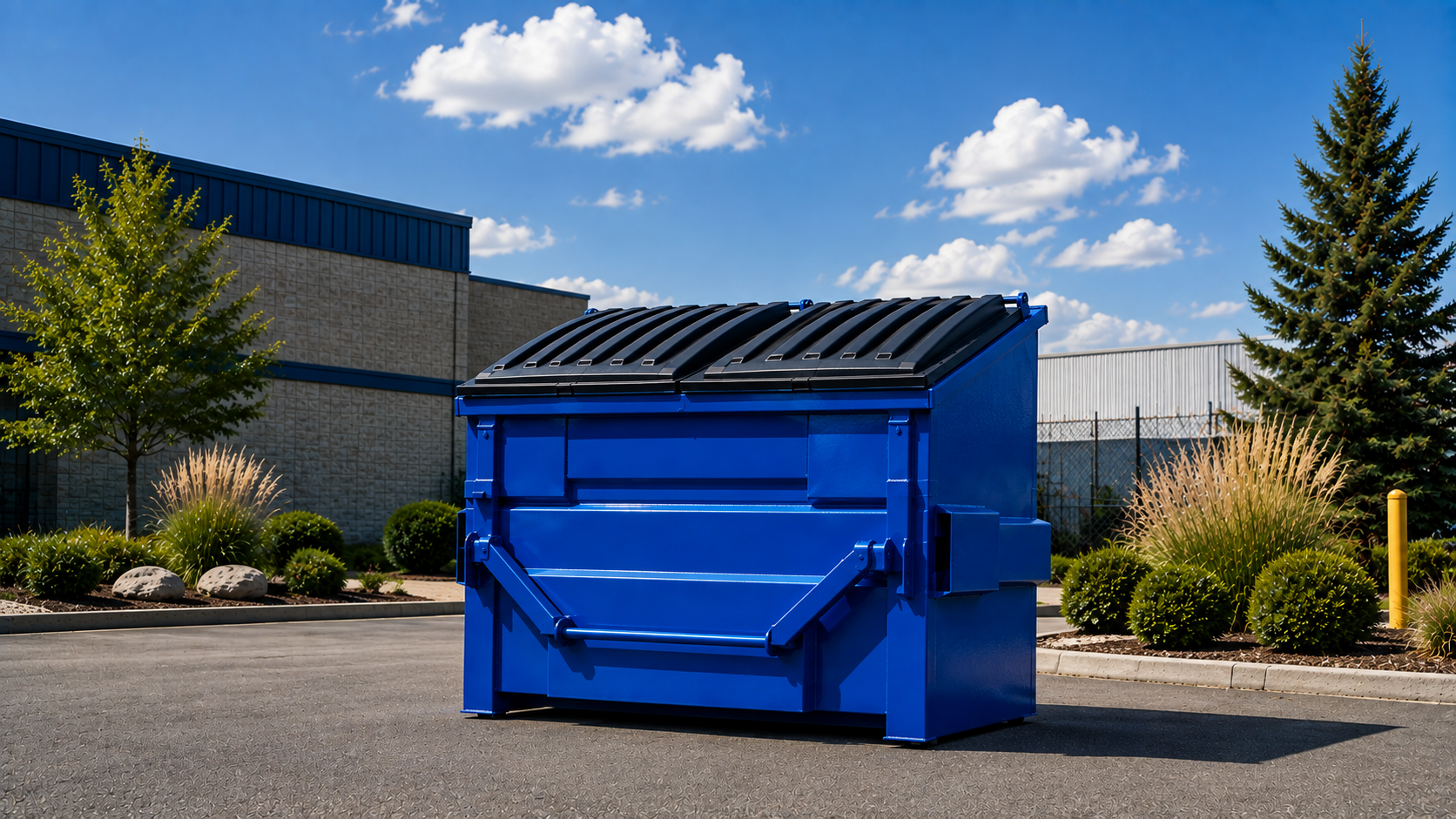
Front-load dumpsters are smaller, lidded containers designed for ongoing waste collection.
Collection trucks use front-mounted lifting arms to raise and empty these dumpsters into the truck.
They are commonly used at:
- Restaurants and cafés
- Offices and retail stores
- Apartment communities
- Grocery stores
- Warehouses
- Manufacturing facilities
Unlike temporary roll-offs, front-load dumpsters typically remain at the business location and are emptied according to a recurring schedule.
Types of Commercial Dumpsters by Size
Rearden Environmental offers 2-, 4-, 6-, and 8-yard front-load dumpsters.
| Commercial Size | Capacity | Typical Business Use |
|---|---|---|
| 2 Yard | 2 cubic yards | Small offices, salons, boutiques |
| 4 Yard | 4 cubic yards | Mid-sized restaurants, gas stations, retail stores |
| 6 Yard | 6 cubic yards | Grocery stores, apartment communities, chain restaurants |
| 8 Yard | 8 cubic yards | Warehouses, large restaurants, manufacturing facilities |
These types of commercial dumpsters differ primarily in capacity and physical dimensions.
A 2-yard dumpster may be sufficient for a small office producing limited daily trash. A busy restaurant or grocery store may need a 6- or 8-yard container with more frequent collection.
Rearden Environmental also offers slant and square configurations for certain larger front-load dumpsters, with side doors available on selected square models upon request.
How Often Should Commercial Dumpsters Be Emptied?
Collection frequency depends on how much waste accumulates between pickups.
For example:
- A small office may need weekly collection.
- A restaurant may need multiple pickups per week.
- A warehouse may need a larger container or customized schedule.
The goal is to prevent overflow without paying for unnecessary capacity or collection visits.
Rearden Environmental offers commercial dumpster rental services with flexible collection schedules for businesses across its Michigan service area.
3. Rear-Load Dumpsters: An Alternative for Commercial Properties
Rear-load dumpsters serve a similar purpose to front-load containers but use a different collection mechanism.
Rather than being lifted by the truck’s front arms, these containers are emptied through equipment positioned at the rear of a compatible collection truck.
They are used for recurring commercial waste collection at businesses and properties where the collection arrangement supports that equipment.
Common applications include:
- Commercial properties
- Retail locations
- Apartment buildings
- Businesses with designated waste collection areas
Rear-load dumpsters commonly range from 2 to 8 cubic yards, although availability varies.
Front-Load vs. Rear-Load Dumpsters
| Feature | Front-Load | Rear-Load |
|---|---|---|
| Collection method | Lifted from the front of the truck | Emptied using rear-loading equipment |
| Typical use | Recurring business trash | Recurring business trash |
| Common sizes | 2–8 yards | 2–8 yards |
| Key consideration | Front-lift access and clearance | Compatible truck access and collection setup |
Neither design is automatically better for every property. The appropriate choice depends on available equipment, site access, and the collection service.
4. Compactor Dumpsters: Best for High-Volume Waste
Compactor dumpsters use mechanical pressure to compress waste, reducing the space it occupies.
They can be useful for businesses that generate large amounts of compressible waste and want to reduce the frequency of collection.
Common applications include:
- Grocery stores
- Distribution centers
- Manufacturing facilities
- Large retail properties
- High-volume commercial buildings
Common Types of Waste Compactors
Stationary compactors: The compaction equipment stays in place while a detachable container is hauled away for emptying. These are commonly used for dry commercial waste.
Self-contained compactors: The compactor and container form a combined unit, making them useful for certain wet waste streams and applications requiring greater containment.
Compactors generally require more initial investment, adequate installation space, electrical access, and appropriate servicing.
They aren’t necessary for every business.
For properties producing modest amounts of waste, a standard front-load dumpster may be simpler and more economical.
Types of Dumpsters for Rent: Which One Do You Need?
Choosing between the types of dumpsters for rent becomes easier when you start with the waste you’re generating and how long you’ll need collection service.
| Your Situation | Recommended Dumpster Type | Starting Size |
|---|---|---|
| Cleaning out a garage | Roll-off | 10 yard |
| Remodeling a kitchen | Roll-off | 20 yard |
| Renovating an entire property | Roll-off | 30 yard |
| Large construction project | Roll-off | 30–40 yard |
| Small office with routine trash | Front-load | 2 yard |
| Restaurant with daily waste | Front-load | 4–6 yard |
| Grocery store or apartment property | Front-load | 6–8 yard |
| Warehouse with high waste volume | Front-load or compactor | Based on waste assessment |
These are starting recommendations. Final selection depends on material type, weight, volume, pickup frequency, and available space.
For example, a contractor renovating a restaurant may need a temporary 20-yard roll-off for demolition debris.
Once the restaurant reopens, it may need a 4- or 6-yard front-load dumpster for routine trash.
The business hasn’t necessarily increased or decreased its waste needs. The type of waste and collection purpose have changed.
How Much Do Different Types of Dumpsters Cost?
Dumpster rental pricing depends on the container type, size, rental period, waste volume, and collection requirements.
Temporary roll-offs and recurring commercial dumpsters use different pricing models.
Roll-Off Dumpster Rental Costs
Rearden Environmental’s published cost guide provides the following general national estimates.
| Dumpster Size | Estimated Rental Cost |
|---|---|
| 10 Yard | $300–$550 |
| 20 Yard | $400–$700 |
| 30 Yard | $500–$850 |
| 40 Yard | $600–$1,000 |
Roll-off rental pricing commonly accounts for:
- Dumpster size and delivery location
- Agreed rental period
- Included weight allowance
- Pickup and disposal
- Additional hauling or rental days
For a detailed breakdown, read our guide to how much dumpster rental costs.
Commercial Dumpster Rental Costs
Recurring commercial dumpster pricing works differently.
A business may pay according to its container size, waste volume, collection frequency, and service agreement.
For example, a 4-yard dumpster collected twice weekly may cost more or less than an 8-yard dumpster collected once weekly.
Both arrangements offer the same nominal weekly collection volume, but the total cost depends on the provider’s pricing structure and operational requirements.
Rearden Environmental provides customized commercial waste collection quotes rather than a single published monthly rate.
Compactor Costs
Compactor pricing depends on the equipment type, installation, service requirements, and hauling arrangement.
A compactor may reduce the number of collections needed for compressible waste, but equipment and maintenance costs must also be considered.
Cost-saving advice: Compare the total service cost, not simply the advertised container price.
How to Choose the Right Type of Dumpster in 5 Steps
Once you understand the available types of dumpsters, use these five questions to narrow down your options.
1. Is Your Waste Temporary or Ongoing?
A renovation or property cleanout usually calls for a roll-off dumpster.
Routine trash collection at an operating business generally requires a front-load container or another recurring waste solution.
2. What Materials Are You Throwing Away?
Waste type can determine which dumpster is appropriate.
For example:
- Household junk and approved remodeling debris generally suit roll-offs.
- Everyday office and restaurant trash typically suits front-load dumpsters.
- High-volume compressible waste may justify a compactor.
- Heavy concrete and brick require special container arrangements.
Rearden Environmental requires all-concrete and all-brick loads to use a 10-yard dumpster.
Yard waste must also remain separate from trash, with designated yard-waste containers used only for that material.
3. How Much Waste Will You Generate?
Estimate your debris volume in cubic yards.
For a temporary project, consider the total waste generated from beginning to end.
For a business, estimate how much accumulates between scheduled collections.
Remember that cubic yards measure volume, not weight. A container can reach its permitted weight limit before appearing full.
4. How Much Space Is Available?
Check the proposed placement area for:
- Container length, width, and height
- Truck access
- Overhead clearance
- Loading-door access
- Gates and enclosure restrictions
- Public property or street permit requirements
A larger dumpster may offer more capacity but still be unsuitable if a delivery truck cannot access the property safely.
5. What Is the Total Rental Cost?
Compare quotes based on the services included.
For temporary roll-offs, ask about rental days, weight allowances, and additional-haul charges.
For recurring commercial service, compare container sizes and pickup schedules.
The cheapest starting price isn’t always the most economical arrangement.
Common Mistakes When Choosing Between Dumpster Types
Even when you select the correct category, a few mistakes can increase costs or disrupt collection.
Choosing based only on size: A 20-yard roll-off and an 8-yard front-load dumpster serve different purposes. The larger number doesn’t make one universally better.
Using a commercial dumpster for construction debris: Standard front-load dumpsters are intended for routine business waste, not heavy demolition materials.
Ignoring weight limits: Dense materials may exceed hauling requirements long before a container reaches its nominal volume.
Renting more capacity than needed: A large dumpster may be unnecessary for a small cleanout or a low-volume business.
Overlooking collection frequency: Businesses may be able to adjust pickup schedules instead of immediately moving to a larger container.
Mixing incompatible materials: Confirm acceptance requirements before placing yard waste, masonry, chemicals, batteries, or other regulated materials into a dumpster.
Dumpster Rental Options From Rearden Environmental
Rearden Environmental provides waste management services for homeowners, contractors, property managers, and businesses throughout Metro Detroit and across the lower peninsula of Michigan.
Our main dumpster rental options include:
Roll-Off Dumpster Rentals
We offer 10-, 20-, 30-, and 40-yard roll-off dumpsters for:
- Home cleanouts
- Renovations and remodeling
- Roofing projects
- Construction and demolition
- Commercial property cleanups
Our team helps customers select a suitable size based on project scope, debris volume, material type, and placement requirements.
Commercial Dumpster Rentals
We offer 2-, 4-, 6-, and 8-yard front-load dumpsters for ongoing business waste collection.
These containers are suitable for offices, restaurants, retail stores, apartment properties, warehouses, and other commercial operations.
Collection schedules can be tailored to waste volume and business needs.
We also provide separate compactor and recycling solutions for businesses with more specialized requirements.
If you’re unsure which service fits your property, our team can explain the available options and help you plan a suitable collection arrangement.
For more guidance on choosing a local rental provider, read Where to Rent a Dumpster in Michigan.
Choose the Right Dumpster for Your Project
The best dumpster isn’t necessarily the biggest or cheapest. It’s the one that matches your waste type, volume, collection needs, and available space.
Understanding the types of dumpsters helps you avoid renting an unsuitable container and makes it easier to compare costs.
For temporary projects, consider a roll-off dumpster. For ongoing business trash, choose an appropriate commercial front-load container. For high-volume compressible waste, a compactor may be worth evaluating.
Rearden Environmental can help you select the right waste collection solution for your home, construction site, or commercial property.
Get a Free Dumpster Rental Quote. Call Rearden Environmental: 1-855-50-TRASH
Frequently Asked Questions About Types of Dumpsters
What Are the Main Types of Dumpsters?
The main types are roll-off, front-load, rear-load, and compactor dumpsters. Roll-offs are commonly used for temporary projects, while front-load and rear-load containers support recurring commercial waste collection. Compactors reduce waste volume through mechanical compression.
What Is the Difference Between a Roll-Off and Commercial Dumpster?
A roll-off dumpster is typically used for temporary cleanouts, remodeling, and construction projects. A commercial front-load dumpster is designed for regular business trash collection and is emptied on a recurring schedule.
What Are the Most Common Roll-Off Dumpster Sizes?
Common roll-off sizes include 10, 15, 20, 30, and 40 cubic yards, depending on the provider. Rearden Environmental offers 10-, 20-, 30-, and 40-yard containers.
What Are the Different Types of Commercial Dumpsters?
Front-load, rear-load, and compactor dumpsters are common commercial waste collection options. Rearden Environmental offers front-load dumpsters in 2-, 4-, 6-, and 8-yard sizes, along with separate compactor solutions.
Which Type of Dumpster Is Best for Home Renovations?
A roll-off dumpster is generally the best choice for home renovations. A 10-yard container may suit minor remodeling, while a 20- or 30-yard dumpster may be more appropriate for larger projects.
What Type of Dumpster Is Best for a Restaurant?
A front-load commercial dumpster is commonly used for everyday restaurant waste. Depending on waste volume and pickup frequency, a 4- or 6-yard container may be a practical starting point.
Can I Put Concrete or Brick in Any Dumpster?
No. Heavy materials require specific handling and container arrangements. Rearden Environmental requires all-concrete and all-brick loads to use a designated 10-yard dumpster.
Are Dumpster Sizes Measured by Weight or Volume?
Dumpster sizes are measured by volume in cubic yards. Weight allowances are separate and depend on the rental agreement, material type, and applicable hauling requirements.
Is It Cheaper to Rent a Larger Dumpster?
Not necessarily. A larger roll-off may reduce the need for additional hauls, but it can also cost more upfront. For commercial service, compare the total monthly cost of different container sizes and pickup schedules.
Which Dumpster Type Does Rearden Environmental Offer in Michigan?
Rearden Environmental offers 10-, 20-, 30-, and 40-yard roll-off dumpsters, plus 2-, 4-, 6-, and 8-yard commercial front-load containers. Separate compactor solutions are also available.