A 20-yard dumpster can hold a considerable amount of waste, but how you load it determines how much usable space you actually get.
Throwing furniture, drywall, and construction debris into the container without a plan can leave large gaps, create uneven weight distribution, and fill the dumpster before your cleanup is finished.
The best way to load a 20-yard dumpster efficiently is to start with approved heavy and flat materials, distribute weight evenly, break down bulky items, fill gaps with smaller debris, and keep everything below the fill line.
But there’s more to efficient loading than fitting everything inside. You also need to consider material restrictions, weight allowances, safe lifting, and pickup requirements.
This guide explains how to load a 20 yard dumpster efficiently for home cleanouts, remodeling, roofing, and construction projects, with practical tips to help you make the most of your rental.
Understanding Your 20-Yard Dumpster’s Size and Capacity
Before loading, it helps to understand how much space you have.
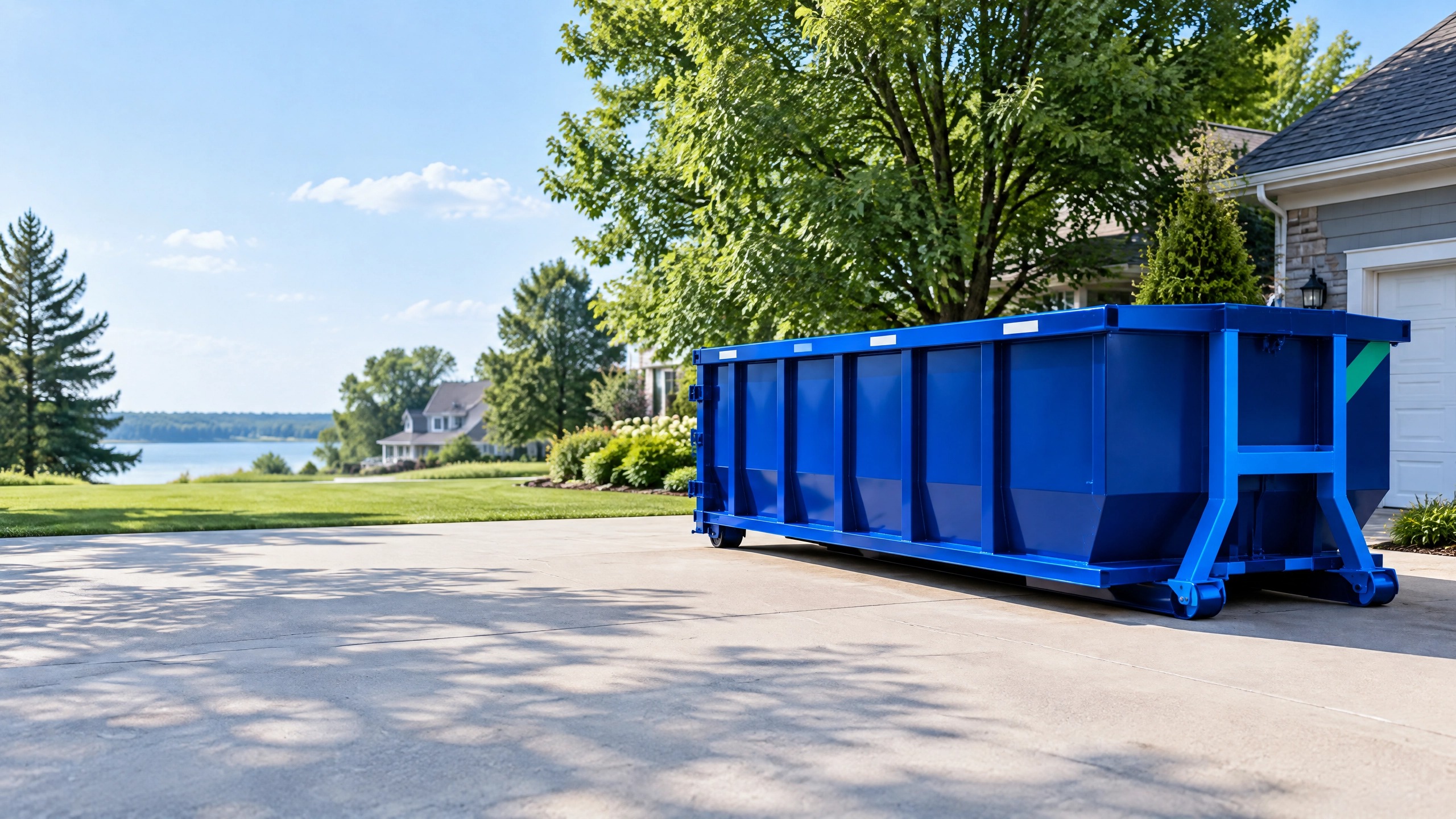
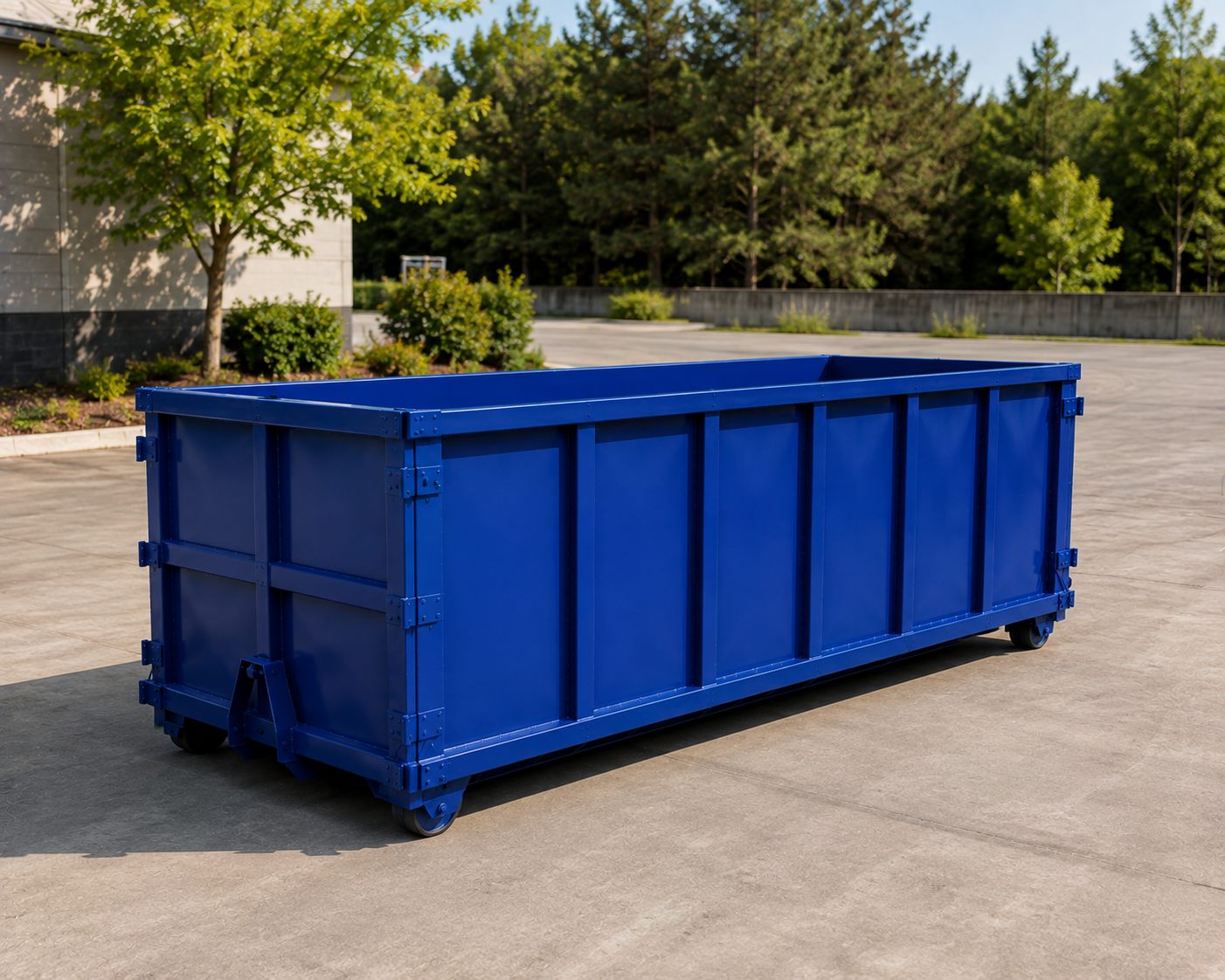
A 20-yard roll-off dumpster from Rearden Environmental measures approximately:
| Specification | Measurement |
|---|---|
| Length | 22 feet |
| Width | 8 feet |
| Height | 4.5 feet |
| Nominal capacity | 20 cubic yards |
| Approximate pickup truckloads | 6–8 |
| Common uses | Home cleanouts, remodeling, roofing, and approved construction debris |
Pickup truckload equivalents are approximate. Actual capacity depends on the materials, how they’re arranged, and applicable weight requirements.
The container’s nominal volume is 20 cubic yards, equivalent to approximately 540 cubic feet.
However, the exterior dimensions should not be used to calculate exact usable interior volume. Wall thickness, container design, and loading restrictions affect the space available.
What Does 20 Cubic Yards Actually Mean?
Think of cubic yards as a measurement of space, not weight.
A dumpster containing couches, cardboard, and cabinets may fill up before reaching its included weight allowance.
The same container filled with dense materials could reach a weight restriction while much of its volume remains empty.
Efficient loading means using available space without exceeding safe hauling requirements.
For more details about dimensions and project uses, read How Big Is a 20-Yard Dumpster?.
How to Load a 20-Yard Dumpster Efficiently: 12 Practical Tips
The following techniques apply to most approved household, remodeling, and mixed construction debris.
The order matters because materials placed at the bottom become difficult to rearrange once the container begins filling.
1. Sort Your Debris Before Loading
Start by separating materials according to size, weight, and disposal requirements.
Create designated areas for:
- Large furniture and bulky items
- Flat materials such as drywall and plywood
- Smaller approved debris
- Recyclable materials
- Heavy materials requiring special arrangements
- Prohibited or separately managed waste
Sorting prevents you from discovering restricted items after they’ve already been buried beneath other debris.
It also makes the loading sequence easier to organize.
Important: Keep yard waste separate from trash. Rearden Environmental does not permit these materials to be mixed in the same container.
2. Open and Secure the Walk-In Door Before Loading
Many roll-off dumpsters have a rear door that allows materials to be carried or wheeled into the container.
If your dumpster has one, follow the provider’s instructions for opening and securing it.
A walk-in door can make loading bulky items easier because you don’t have to lift everything over the sidewalls.
Before loading:
- Confirm the door is secured in the open position.
- Keep the entrance clear of loose debris.
- Use appropriate equipment for heavy objects.
- Make sure the loading path is stable and unobstructed.
Never attempt to operate a damaged or jammed door.
3. Start With Approved Heavy and Flat Materials
For mixed loads, begin with heavier approved materials that can form a stable base.
Examples may include:
- Wood flooring
- Plywood
- Flat drywall sections
- Other approved dense construction materials
Lay these materials flat and spread them across the container floor.
Avoid concentrating everything at the front, back, or one side.
Do not use a 20-yard dumpster for all-concrete or all-brick loads with Rearden Environmental. Those jobs require a 10-yard container.
4. Distribute Weight Evenly Throughout the Dumpster
Even weight distribution is essential for safe hauling.
A container that’s heavily loaded at one end can create transportation and handling problems, even when the debris remains below the fill line.
As you load:
- Spread heavier approved materials across the floor.
- Avoid creating one large mound.
- Balance materials along the container’s length.
- Check the distribution periodically from a safe position.
For roofing and demolition projects, this is especially important because debris can be significantly heavier than ordinary household junk.
5. Break Down Bulky Furniture Before Loading
Large furniture often wastes space because of its irregular shape.
A table with its legs attached, for example, can leave a large unused area beneath it.
Where safe and practical:
- Remove table legs.
- Take drawers out of cabinets.
- Disassemble shelving.
- Separate removable furniture components.
- Flatten empty cardboard boxes.
Place the larger flat pieces first, then arrange smaller approved items around them.
Avoid dismantling unfamiliar appliances, pressurized equipment, or potentially hazardous materials.
6. Load Long and Flat Materials Horizontally
Drywall, plywood, doors, and lumber can consume unnecessary space when placed at awkward angles.
Arrange them horizontally wherever possible.
Flat stacking helps create more even layers and reduces the gaps that form beneath slanted materials.
For lumber, cut oversized pieces into manageable lengths when it is safe to do so.
Remove or control exposed nails and sharp edges to reduce injury risks during handling.
7. Fill Empty Gaps With Smaller Debris
Once large items are positioned, look for accessible spaces between them.
These gaps can often accommodate smaller approved materials, such as:
- Wood offcuts
- Small drywall pieces
- Broken-down cardboard
- Bagged household junk
- Other compatible debris
The goal is to use available space without forcing materials into unstable positions.
For example, instead of stacking several chairs upright, arrange them to reduce wasted space and use smaller items to fill safe, reachable gaps.
Do not climb onto unstable debris to reach empty spaces.
8. Build Even Layers Instead of One Large Pile
A common loading mistake is repeatedly throwing debris into the middle of the dumpster.
This creates a mound while leaving unused space along the sides and ends.
A better approach is to build relatively even layers.
Start with flat materials, position bulky items, and fill accessible gaps before adding another layer.
This technique helps use the container’s full length and width.
It also makes it easier to monitor how much space remains.
9. Keep Lighter Materials Toward the Top
Once heavier approved items are positioned, add lighter materials above them.
Examples may include:
- Flattened cardboard
- Lightweight packaging
- Bagged clothing
- Small household items
- Approved lightweight renovation debris
Keep loose materials contained so they cannot blow away or shift during transport.
Avoid placing heavy objects on top of fragile or unstable items.
The goal is a secure, balanced load rather than simply filling every visible opening.
10. Never Load Above the Fill Line
Even if your dumpster has space above the existing debris, that doesn’t mean you can stack materials beyond the container’s top edge.
All waste must remain at or below the designated fill line or permitted loading height.
Nothing should hang over the sides or protrude from the top.
Overfilled dumpsters can create transportation hazards and may require materials to be removed before pickup.
If you’re running out of space, contact the rental provider about an additional haul or a suitable container exchange.
11. Monitor Weight as Well as Volume
A dumpster can be only partially full and still exceed its included weight allowance.
This is particularly relevant when disposing of:
- Roofing shingles
- Ceramic tile
- Plaster
- Dense flooring
- Approved mixed demolition debris
If your load exceeds the included weight allowance, overage charges may apply.
However, the load must also remain under the maximum permitted tonnage cap and comply with applicable state laws and transportation regulations.
Ask Rearden Environmental about the included weight allowance and overage rate before loading substantial quantities of dense materials.
12. Perform a Final Loading and Pickup Inspection
Before scheduling pickup, inspect the container from a safe position outside it.
Confirm that:
- Debris is below the fill line.
- No items protrude beyond the container.
- Weight appears reasonably distributed.
- The rear door is closed and secured according to instructions.
- The surrounding area is clear.
- The truck has unobstructed access.
- No prohibited materials were added.
If anything needs to be adjusted, do so using safe methods and appropriate equipment.
Never climb onto unstable debris or attempt to compact the load with a vehicle.
How to Load a Roll-Off Dumpster Based on Waste Type
Different materials require different loading techniques.
The most efficient method for a household cleanout may not be suitable for a roofing or demolition project.
| Waste Type | Recommended Loading Approach | What to Watch For |
|---|---|---|
| Furniture | Safely disassemble bulky pieces and fill accessible gaps | Large unused spaces |
| Drywall | Stack flat sections in even layers | Dust, sharp edges, and weight |
| Lumber | Arrange manageable lengths horizontally | Protruding nails and unstable stacks |
| Roofing shingles | Distribute approved debris evenly | Weight accumulation |
| Cabinets | Remove doors and shelves where practical | Bulky shapes and wasted space |
| Household junk | Place larger items first, smaller items around them | Hidden prohibited materials |
| Concrete and all-brick loads | Use a designated 10-yard container | Heavy debris and hauling requirements |
| Yard waste | Use a separate yard-waste-only container | Never mix with trash |
Loading Furniture and Household Junk
Furniture cleanouts are primarily a space-management challenge.
A couch, dresser, and dining table may leave large gaps when placed randomly.
Start with larger items that can be positioned securely, then use smaller approved materials to occupy accessible spaces.
Mattresses are permitted in Rearden Environmental’s roll-off dumpsters, but they should still be positioned so they don’t extend above the fill line.
Loading Drywall and Construction Debris
Drywall and lumber are easier to manage when stacked in relatively flat layers.
Avoid leaning large sheets against the sidewalls if doing so creates significant unused space.
Keep sharp or broken materials contained, and use suitable protective equipment.
For construction projects, periodically check how much debris remains to be removed so you can arrange another haul before the container is full.
Loading Roofing Materials
Roofing shingles can be dense.
Spread approved roofing debris across the container rather than allowing it to accumulate in one area.
Do not assume that a 20-yard dumpster can be filled completely with shingles.
The appropriate load depends on the shingle type, total weight, and rental requirements.
If you’re removing multiple roofing layers, discuss the expected debris with the provider before loading.
Loading Concrete, Brick, and Other Heavy Materials
For Rearden Environmental, all-concrete and all-brick loads require a 10-yard dumpster.
A small amount of brick mixed with other approved debris may be suitable for a 20-yard container, subject to confirmation.
This distinction matters because concrete and brick can reach hauling weight limits before occupying much of the available space.
Do not assume that another company’s heavy-debris loading recommendations apply to your Rearden Environmental rental.
For dirt and rock, confirm acceptance and container requirements directly before loading.
How Full Can You Load a 20-Yard Dumpster?
You can load a 20-yard dumpster up to its permitted fill level, provided the materials are approved and the total load complies with applicable hauling requirements.
The two limits to consider are:
- Volume limit: Debris must remain below the fill line or permitted top edge.
- Weight requirements: The load must comply with the maximum tonnage cap and transportation regulations, even when additional weight overage charges apply.
A container can reach either limit first.
The Difference Between a Full Dumpster and an Overloaded Dumpster
A full dumpster has reached its usable volume.
An overloaded dumpster exceeds a permitted loading condition, such as the maximum safe hauling weight or allowed fill height.
For example, a container filled with bulky furniture may reach its volume limit without reaching its weight allowance.
A container containing dense demolition debris may reach its permitted weight long before appearing full.
Never judge remaining capacity by empty space alone.
Common Dumpster Loading Mistakes That Waste Space and Money
Even a properly sized dumpster can become inefficient when materials are loaded incorrectly.
Throwing Everything Into the Middle
This creates a central pile and leaves unused space around the edges.
Instead, load systematically across the container.
Leaving Furniture Fully Assembled
Large items may trap substantial empty space.
Disassemble suitable furniture before loading, provided it can be done safely.
Mixing Yard Waste With Trash
This is not permitted under Rearden Environmental’s loading requirements.
Use a separate yard-waste-only container when needed.
Loading Heavy Materials Without Approval
Concrete, brick, and other dense debris require special consideration.
All-concrete and all-brick jobs must use a 10-yard container.
Ignoring the Fill Line
Piling debris above the container rim can delay pickup and create transportation hazards.
Blocking the Rear Door
If materials shift against the door, it may become difficult to close securely.
Follow the container’s loading and door-operation instructions.
Forgetting About Pickup Access
Vehicles, construction equipment, and loose debris can obstruct the collection truck.
Keep the approach clear throughout the rental.
How Much Labor Does It Cost to Load a Dumpster?
The labor cost to load a dumpster depends on the amount of waste, material weight, number of workers, site accessibility, and whether you hire a professional crew.
A 20-yard dumpster rental generally covers the container and associated rental services—not a crew to load your waste—unless labor is specifically included in the agreement.
What Affects Dumpster Loading Labor Costs?
| Factor | Cost Impact |
|---|---|
| Amount of debris | More material generally requires more labor hours |
| Weight of materials | Heavy objects may need additional workers or equipment |
| Distance to dumpster | Long carrying distances increase loading time |
| Stairs and access | Difficult access can slow the work |
| Furniture disassembly | Adds preparation time but may improve loading efficiency |
| Sorting requirements | Separating materials takes time but can prevent disposal problems |
| Equipment | Dollies, carts, or machinery may affect labor needs and costs |
How to Estimate Labor Costs
For hourly workers, use this basic formula:
Labor cost = Number of workers × Hours worked × Hourly rate
For example, if two workers take four hours and charge $40 per hour each:
2 × 4 × $40 = $320
This is a calculation example, not a verified Michigan market rate or a Rearden Environmental labor quote.
Actual costs may also include minimum service charges, equipment, transportation, and disposal-related work.
DIY Loading vs. Hiring Help
DIY loading may be suitable for small household cleanouts involving manageable items.
Professional labor may be worth considering for heavy furniture, demolition debris, multi-story buildings, or projects with tight deadlines.
When comparing options, consider both labor costs and the time required to complete the cleanup.
How Contractors Can Load Dumpsters More Efficiently
For contractors, efficient dumpster loading involves coordinating waste removal with the project schedule.
The goal is to keep debris moving without interrupting work or creating unnecessary hauling expenses.
Create a Debris Plan Before Demolition
Identify the main waste materials expected during each stage.
A kitchen remodel, for example, may generate cabinets and fixtures first, followed by drywall, flooring, and packaging.
Planning these waste streams helps determine whether one container will be sufficient.
Assign a Loading Area
Keep a clear route between the work area and the dumpster.
Use designated staging areas for approved debris, recycling, and materials requiring separate disposal.
This prevents workers from mixing incompatible waste streams.
Establish Simple Crew Loading Rules
Make sure everyone understands:
- Which materials are accepted
- How to distribute heavy debris
- Where to place bulky items
- Why the fill line matters
- Which materials require separate containers
- When to notify the site supervisor that the dumpster is nearly full
Clear instructions reduce the need to rearrange materials later.
Schedule Container Exchanges Before Work Stops
If the dumpster is likely to fill during a major demolition phase, arrange pickup or an exchange in advance.
Waiting until the container is completely full may leave workers without a suitable place for additional debris.
Track Weight-Sensitive Materials
Roofing, tile, plaster, and other dense materials should be monitored carefully.
Don’t rely solely on visual estimates of remaining space.
For all-concrete or all-brick projects, use a designated 10-yard container.
How Efficient Loading Can Reduce Dumpster Rental Costs
Loading efficiently can help you make better use of the container you’ve rented.
However, the savings depend on your project and rental terms.
Fewer Additional Hauls
If approved debris fits within one container instead of requiring another pickup, you may avoid additional hauling charges.
Better Use of Available Capacity
Breaking down bulky items and filling gaps reduces wasted volume.
This can be especially valuable during residential cleanouts.
Fewer Pickup Problems
Keeping the load below the fill line and following material restrictions helps reduce the risk of collection delays.
Improved Project Scheduling
A well-organized loading process helps contractors keep work areas clear and coordinate waste removal with project phases.
Better Weight Management
Distributing debris and monitoring dense materials can help prevent avoidable weight overage charges.
For a detailed explanation of pricing factors, read How Much Does It Cost to Rent a Dumpster?.
What Materials Should Never Go Into a Standard Roll-Off Dumpster?
Knowing how to load a dumpster also means knowing what to leave out.
Rearden Environmental’s standard roll-off dumpsters do not accept certain hazardous or regulated materials.
Examples include:
- Hazardous chemicals and flammable liquids
- Fuels and oils
- Batteries and certain electronics
- Tires
- Asbestos and other regulated materials
- Refrigerant-containing appliances
- Medical waste and other materials requiring special handling
Some construction materials may also require separate arrangements.
Michigan Disposal Requirements
The Michigan Department of Environment, Great Lakes, and Energy (EGLE) identifies materials that are prohibited from ordinary landfill disposal or subject to special handling.
These include yard clippings, used oil, whole tires, lead-acid batteries, and certain hazardous wastes, with applicable exceptions and regulatory requirements.
You can review the Michigan EGLE landfill disposal guidance for more information.
Important: A material being legally eligible for some disposal method does not automatically mean your dumpster provider accepts it.
Always confirm unusual materials before loading.
Safety Tips for Loading a Roll-Off Dumpster
Efficient loading should never come at the expense of safety.
Use Appropriate Protective Equipment
Depending on the debris, workers may need:
- Work gloves
- Safety footwear
- Eye protection
- Long sleeves
- Dust protection appropriate to the task
Use suitable respiratory protection and dust-control procedures when the material or work activity requires them.
Use Proper Lifting Techniques
Avoid lifting heavy or awkward objects alone.
Use dollies, carts, lifting equipment, or additional workers where appropriate.
Don’t twist while carrying heavy loads or attempt to lift items beyond your capabilities.
Never Climb Onto Unstable Debris
Do not climb into a partially filled container to compact or rearrange unstable waste.
Never use a vehicle or heavy equipment to crush debris inside the dumpster unless the provider has expressly approved a suitable procedure.
Keep Children and Pets Away
A dumpster may contain sharp objects, unstable materials, and heavy debris.
Keep unauthorized people away from the loading area.
Maintain a Clear Work Area
Remove loose debris around the container, keep walkways open, and maintain access for pickup trucks.
Before Pickup: A 20-Yard Dumpster Loading Checklist
Use this checklist when your project is complete.
- All materials are approved for the container.
- Yard waste has not been mixed with trash.
- Debris is at or below the permitted fill line.
- No items protrude beyond the sides or top.
- Heavy materials are reasonably distributed.
- The load complies with maximum hauling requirements.
- The rear door is closed and secured as instructed.
- No loose waste is blocking the container.
- Vehicles and equipment are clear of the pickup route.
- Pickup has been arranged with the rental provider.
If you’re uncertain about the load, contact the provider before scheduling collection.
Rent a 20-Yard Roll-Off Dumpster From Rearden Environmental
Rearden Environmental provides roll-off dumpster rental services for residential cleanouts, renovations, roofing, construction, and commercial projects.
Based in Rochester, Michigan, we serve Metro Detroit and across the lower peninsula of Michigan, including Detroit, Livonia, Troy, Clinton Township, and other communities within our service area.
Our 20-yard roll-off dumpsters are suitable for many small-to-medium residential and commercial projects involving approved debris.
We also offer 10-, 30-, and 40-yard containers for different project requirements.
If your project involves all-concrete or all-brick waste, our team can help you arrange the appropriate 10-yard container.
For businesses requiring recurring trash collection rather than temporary construction waste removal, explore our commercial dumpster rental services.
Need help choosing the right dumpster or planning your cleanup?
Contact Rearden Environmental to discuss your project, accepted materials, rental terms, and delivery requirements.
Final Thoughts: Load Smarter, Not Just Fuller
Learning how to load a 20 yard dumpster efficiently helps you get more usable space from your rental while keeping the cleanup organized and the container suitable for pickup.
The most effective approach is to sort materials first, build stable layers, break down bulky items, distribute weight evenly, and stay below the fill line.
Remember that efficient loading doesn’t override material restrictions or hauling limits. Heavy debris, especially concrete and brick, may require a different container even when a 20-yard dumpster has space available.
Rearden Environmental can help you choose the right roll-off dumpster, understand loading requirements, and coordinate delivery and pickup for your Michigan project.
Frequently Asked Questions
How Do You Load a 20-Yard Dumpster Efficiently?
Start by sorting approved debris, loading heavier flat materials at the bottom, and distributing weight evenly. Break down bulky furniture, fill accessible gaps with smaller items, and keep the load below the fill line.
What Should You Put in a Dumpster First?
For an approved mixed load, start with heavier, flat materials such as wood flooring, plywood, or drywall. Spread them across the bottom rather than concentrating the weight in one area.
How Do You Load a Roll-Off Dumpster With Furniture?
Disassemble suitable furniture where safe, remove table legs and drawers, and arrange larger pieces to minimize unused space. Use smaller approved items to fill accessible gaps without creating unstable stacks.
How Much Can You Fit in a 20-Yard Dumpster?
A 20-yard dumpster has a nominal capacity of 20 cubic yards, commonly estimated at approximately 6–8 pickup truckloads. Actual loading capacity depends on material size, weight, arrangement, and the rental’s hauling requirements.
How Much Labor Cost to Load a Dumpster?
Labor costs depend on the number of workers, hourly rates, debris weight, accessibility, and time required. Calculate an estimate by multiplying the number of workers by their hours and hourly rate, then add any applicable equipment or service charges.
How Can I Load a Dumpster Efficiently Without Going Over the Weight Allowance?
Identify dense materials before loading, distribute approved debris evenly, and monitor the expected weight. Confirm the included allowance, overage charges, and maximum permitted tonnage with your provider.
Can I Put Concrete in a 20-Yard Dumpster?
Rearden Environmental requires all-concrete loads to use a 10-yard dumpster. Contact the team before loading any concrete or brick into a mixed-debris 20-yard container.
Can I Mix Yard Waste With Trash in a Dumpster?
No. Rearden Environmental requires yard waste and trash to remain separate. A roll-off dumpster designated for yard waste must contain yard waste only.
Can I Load a Dumpster Above the Top Edge?
No. Debris must remain at or below the permitted fill line or top edge, with nothing protruding beyond the container. Overfilled dumpsters may require adjustment before pickup.
Is It Better to Load Heavy or Light Items First?
For approved mixed debris, place heavier flat materials near the bottom and distribute them evenly. Add lighter materials afterward, filling safe, accessible gaps as you go.
Can I Put a Mattress in a 20-Yard Dumpster?
Yes. Rearden Environmental allows mattresses in roll-off dumpsters. Position them within the permitted loading height and avoid creating unstable stacks.
What Happens if My Dumpster Is Too Full for Pickup?
The provider may require you to remove or rearrange debris before collection. If you have more waste than the container can accommodate, arrange an additional haul or another suitable dumpster.