Choosing the wrong dumpster size can leave you paying for unused space or arranging another pickup halfway through your project. Whether you’re cleaning out a house, remodeling a kitchen, or managing demolition debris, the right container depends on how much waste you’ll generate.
So, what size dumpster do I need?
A 10-yard dumpster works for small cleanouts and renovations, a 20-yard dumpster suits many medium-sized projects, and 30- or 40-yard dumpsters are better for large cleanouts, major remodeling, and construction work.
However, size isn’t the only consideration. Debris weight, available driveway space, and material restrictions can affect which dumpster is suitable.
This guide compares common roll off dumpster sizes and helps you choose the right container without paying for more capacity than your project requires.

Dumpster Size Chart: Which One Is Right for Your Project?
Roll-off dumpsters are measured in cubic yards, which indicate the volume of waste they can hold.
Here’s a quick comparison of the most common sizes.
| Dumpster Size | Approximate Pickup Loads* | Best For |
|---|---|---|
| 10 Yard | 3–4 | Small cleanouts, bathroom renovations, minor demolition |
| 20 Yard | 6–8 | Garage cleanouts, kitchen remodeling, flooring, roofing |
| 30 Yard | 9–12 | Whole-house cleanouts, major renovations, construction |
| 40 Yard | 12–16 | Industrial sites, commercial/retail facilities, permanent dumpster locations, and high-volume recycling jobs |
*Pickup-load equivalents are rough estimates based on different reference pickup-bed capacities. Actual amounts vary with truck size, packing, and debris type.
Quick recommendation: For many medium-sized residential projects, start by comparing 20-yard dumpsters. Move up to a 30-yard container when you’re removing large quantities of bulky furniture or remodeling several rooms.
Understanding the Size of Dumpsters: Dimensions and Capacity
The size of dumpsters is determined by their internal volume, but exterior dimensions vary between manufacturers and rental providers.
Here are representative measurements to help you visualize the differences.
| Dumpster Size | Approximate Exterior Dimensions (L × W × H) |
|---|---|
| 10 Yard | 14 × 7.5 × 3.5 ft |
| 20 Yard | 22 × 7.5 × 4.5 ft |
| 30 Yard | 22 × 7.5 × 6 ft |
| 40 Yard | 22 × 7.5 × 8 ft |
These are illustrative dimensions from a published container range, not verified measurements for Rearden Environmental’s inventory. Confirm exact dimensions before booking.
A 20-yard dumpster generally provides twice the internal volume of a 10-yard container. However, both may have similar widths, with the larger container gaining capacity through additional length or height.
What Are the Dimensions of a 10 Yard Dumpster?
The dimensions of a 10 yard dumpster commonly range around 12–14 feet long, 7–8 feet wide, and 3–4.5 feet high, depending on the design.
The relatively compact 10 yard dumpster size makes it useful for smaller residential projects and sites with limited placement space.
For a more detailed explanation, read How Big Is a 10-Yard Dumpster?.
What Are the Typical 20 Yard Dumpster Dimensions?
Typical 20 yard dumpster dimensions are approximately 22 feet long, 7–8 feet wide, and 4–5 feet high.
A 20-yard container offers more capacity while remaining practical for many residential renovations and cleanouts.
Learn more about its capacity in How Big Is a 20-Yard Dumpster?.
What Dumpster Size Do I Need for Different Projects?
The easiest way to choose a container is to start with your project type and estimated debris volume.

10-Yard Dumpster: Small Cleanouts and Renovations
A 10-yard dumpster is a practical starting point for projects that generate limited amounts of waste.
Best for:
- Small garage or basement cleanouts
- Bathroom remodeling
- Minor flooring removal
- Small deck or shed demolition
- Approved heavy debris in designated containers
A smaller container may also be useful when space is restricted.
However, concrete, brick, and dirt can reach weight limits quickly. Confirm acceptance and loading restrictions before disposal.
20-Yard Dumpster: Medium-Sized Home Projects
A 20-yard dumpster is a versatile option for household cleanouts and remodeling projects.
Best for:
- Kitchen renovations
- Garage cleanouts
- Flooring replacement
- Roofing projects
- Moderate furniture removal
- Small-to-medium construction work
This size offers substantial capacity without automatically requiring the largest available container.
30-Yard Dumpster: Major Renovations and Large Cleanouts
A 30-yard dumpster is worth considering when a project involves multiple rooms or substantial quantities of bulky debris.
Best for:
- Whole-house cleanouts
- Major home renovations
- Large estate cleanouts
- Home additions
- Construction debris
- Extensive interior demolition
It may be more practical than a 20-yard container when you expect large furniture, cabinets, drywall, and other bulky materials.
40-Yard Dumpster: Large Construction and Demolition
A 40-yard dumpster provides considerable volume for major projects.
Best for:
- Large construction projects
- Extensive demolition
- Commercial renovations
- Warehouse cleanouts
- Large-volume remodeling debris
Before selecting this size, confirm delivery access, container dimensions, and weight restrictions.
A 40-yard dumpster isn’t automatically suitable for large quantities of heavy materials such as concrete or dirt.
What Size Dumpster Do I Need for a House Cleanout?
For many whole-house cleanouts, a 20- or 30-yard dumpster is a reasonable starting point. The right choice depends on how much you’re removing, not simply the size of the house.
Consider these examples:
| Cleanout Project | Suggested Dumpster |
|---|---|
| Small apartment or limited garage cleanout | 10 Yard |
| Several rooms with furniture and household junk | 20 Yard |
| Entire house with substantial accumulated belongings | 30 Yard |
| Large estate or property with extensive stored items | 30–40 Yard |
A relatively large home may need only a small dumpster if you’re removing a few items. Conversely, a smaller property packed with furniture and stored belongings may require a larger container.
Practical tip: Walk through the property and identify large items first. Sofas, mattresses, cabinets, and furniture often determine how quickly a container fills.
Also confirm whether the provider accepts each item before loading.
What Size Dumpster Do I Need for Demolition?
Demolition projects require special attention because debris volume and weight can vary significantly.
For minor interior demolition, a 10- or 20-yard dumpster may be enough. Larger remodeling and demolition projects may require 30- or 40-yard containers or multiple hauls.
However, the material being removed is just as important as the project size.
Interior Demolition
Drywall, cabinets, flooring, and wood framing can generate bulky debris.
A 20- or 30-yard container may work for many residential interior demolition projects.
Structural Demolition
Major demolition may produce substantial quantities of lumber, drywall, roofing, and other materials.
A 30- or 40-yard dumpster may be suitable for approved bulky debris, depending on the scale of the work.
Concrete and Masonry Removal
Concrete, brick, dirt, and masonry are extremely heavy.
These materials may require a smaller designated container or separate disposal arrangements, even when the total debris volume is relatively low.
The key takeaway: If you’re asking, “what size dumpster do I need for demolition?” estimate the debris weight alongside its volume. A larger container does not eliminate weight restrictions.
How to Calculate the Dumpster Size You Need
You don’t need a complicated formula to make a reasonable initial estimate.

Step 1: Estimate Your Debris Volume
If your debris can be measured as a pile, estimate its length, width, and height in feet.
Use this formula:
Cubic yards = Length × Width × Height ÷ 27
For example, a debris pile measuring 12 feet long, 6 feet wide, and 4 feet high contains approximately:
(12 × 6 × 4) ÷ 27 = 10.7 cubic yards
This estimate suggests that a 10-yard dumpster would be too small for the entire pile.
Step 2: Allow for Empty Spaces
Furniture, lumber, and irregular demolition debris rarely fit together perfectly.
A loose pile may take up more room inside a dumpster than expected, especially when items cannot be broken down safely.
Step 3: Consider Material Weight
A dumpster can reach its weight limit before reaching its volume capacity.
For concrete, masonry, shingles, and other heavy debris, confirm the permitted load with the provider.
Step 4: Match the Estimate to an Available Size
Once you’ve estimated the debris volume, compare it with available containers.
If your project falls between sizes, evaluate whether a larger dumpster or an additional pickup would be more practical.
This approach helps answer what dumpster size do I need using the actual waste rather than relying entirely on broad project categories.
Should You Choose a 20-Yard or 30-Yard Dumpster?
This is one of the most common decisions for homeowners and contractors.
| Consideration | 20-Yard Dumpster | 30-Yard Dumpster |
|---|---|---|
| Capacity | 20 cubic yards | 30 cubic yards |
| Suitable projects | Medium cleanouts and renovations | Large cleanouts and major renovations |
| Bulky debris | Moderate quantities | Larger quantities |
| Placement | Generally lower profile | Typically taller, sometimes similarly long |
| Best choice | When debris volume is manageable | When additional capacity is justified |
Choose a 20-yard dumpster when you’re clearing several rooms, renovating a kitchen, or removing a moderate amount of household junk.
Consider a 30-yard dumpster when you’re clearing an entire property, removing substantial furniture, or remodeling multiple rooms.
The 30-yard option provides 50% more volume than a 20-yard container, but its permitted weight and rental terms must still be checked.
Will the Dumpster Fit in Your Driveway?
Before renting, make sure the container and delivery truck can access your property.
The dumpster’s dimensions alone don’t tell you how much space is required.
Check for:
- Driveway length and width: Enough room for the container and safe placement
- Truck access: Adequate space for the delivery vehicle to approach and position the dumpster
- Overhead clearance: No low wires, branches, or structures obstructing delivery
- Loading access: Room to open the container door when applicable
- Ground conditions: A suitable surface capable of supporting the container and load
A 20-yard dumpster may fit on many residential driveways, but this cannot be guaranteed without checking the specific dimensions and delivery requirements.
If placement on a public street is necessary, ask the local municipality about permits.
Does Dumpster Size Affect Rental Cost?
Yes. Container size is one factor in the total rental price, but it isn’t the only one.
Other considerations include:
- Rental duration
- Debris type and weight
- Delivery location
- Disposal requirements
- Number of pickups or container exchanges
- Potential additional charges
A larger dumpster may cost more initially but could reduce the need for multiple hauls.
On the other hand, renting a 40-yard container for a small cleanout may mean paying for capacity you don’t need.
For detailed cost considerations, read How Much Does It Cost to Rent a Dumpster? and 30-Yard Dumpster Rental Prices.
Choose the Right Roll-Off Dumpster With Rearden Environmental
Rearden Environmental provides roll-off dumpster rental services for home cleanouts, renovations, construction, and approved demolition debris.
Available sizes include:
- 10 Yard: Small cleanouts and minor renovation projects
- 20 Yard: Medium renovations and household cleanouts
- 30 Yard: Major remodeling and larger property cleanups
- 40 Yard: Large construction and commercial projects
Rearden Environmental can help you review your project requirements, choose a suitable container, and understand delivery, pickup, and material restrictions.
For businesses requiring ongoing waste collection rather than a temporary roll-off dumpster, explore commercial dumpster rental services.
Get the Right Dumpster Size for Your Project
If you’re still wondering what size dumpster do I need, focus on three things: how much debris you’ll generate, how heavy the material is, and how much space you have for delivery.
A 10-yard dumpster may be enough for a small cleanout. A 20-yard container suits many medium-sized projects, while 30- and 40-yard dumpsters provide more capacity for major renovations and construction.
The right size helps you manage waste efficiently without paying for unnecessary capacity or arranging avoidable extra pickups.
Need help choosing a dumpster size in Michigan?
Contact Rearden Environmental to discuss your project, compare available containers, and request a quote.
Frequently Asked Questions
What Is a 20 Yard Dumpster Good For?
A 20-yard dumpster is commonly used for medium-sized home cleanouts, kitchen renovations, flooring removal, roofing projects, and moderate construction debris. It provides more capacity than a 10-yard container without requiring the largest available dumpster.
Will a Couch Fit in a 10 Yard Dumpster?
Many couches can fit in a 10-yard dumpster, depending on their dimensions and the container’s design. Measure the couch and confirm the dumpster’s opening and internal dimensions. Also check whether upholstered furniture is accepted.
Can a 20 Yard Dumpster Fit in My Driveway?
A 20-yard dumpster can fit on many residential driveways, but you must account for the container’s dimensions and the delivery truck’s access requirements. Confirm measurements and overhead clearance before scheduling delivery.
How Much Stuff Can Fit in a 30-Yard Dumpster?
A 30-yard dumpster holds 30 cubic yards of material. This is roughly equivalent to 9–12 pickup truckloads under commonly used truckload estimates. Actual capacity depends on debris density, packing, and weight limits.
What Size Dumpster Is Rented the Most?
A 20-yard dumpster is frequently described as a popular choice for residential cleanouts and renovations because it balances capacity and placement requirements. However, the most frequently rented size varies by provider, market, and project type.
How Much Does a 30 Yard Dumpster Cost to Buy?
Purchasing a 30-yard dumpster is different from renting one. The purchase price depends on the manufacturer, steel specifications, container design, condition, and delivery costs. Businesses considering ownership should also account for transportation equipment, storage, maintenance, and disposal arrangements. Request current manufacturer quotes for accurate pricing.
Is It Cheaper to Go to the Dump or Rent a Dumpster?
Taking debris directly to a disposal facility may cost less for a small load if you have suitable transportation and the facility accepts the material. Renting a dumpster can be more practical for larger projects because it reduces repeated trips and allows debris to be collected on-site. Compare transportation, disposal fees, labor, and rental costs.
When Renting a Dumpster, What Can You Not Put in It?
Standard roll-off dumpsters generally prohibit hazardous chemicals, liquid paint, fuels, batteries, tires, asbestos, and other regulated materials. Certain appliances and heavy debris may require special arrangements. Always confirm the provider’s accepted-material list.
Should I Get a 20 or 30 Yard Dumpster?
Choose a 20-yard dumpster for medium-sized cleanouts and renovations. Consider a 30-yard container when you’re removing substantially more furniture, drywall, or construction debris. Compare estimated volume, material weight, available space, and total rental cost.
How Many Pickup Loads Is a 20 Yard Dumpster?
A 20-yard dumpster is commonly estimated to hold approximately 6–8 pickup truckloads, depending on the truck bed’s capacity and how the debris is loaded. These are volume comparisons, not guarantees of permitted weight.
What Does a 20 Yard Roll-Off Dumpster Look Like?
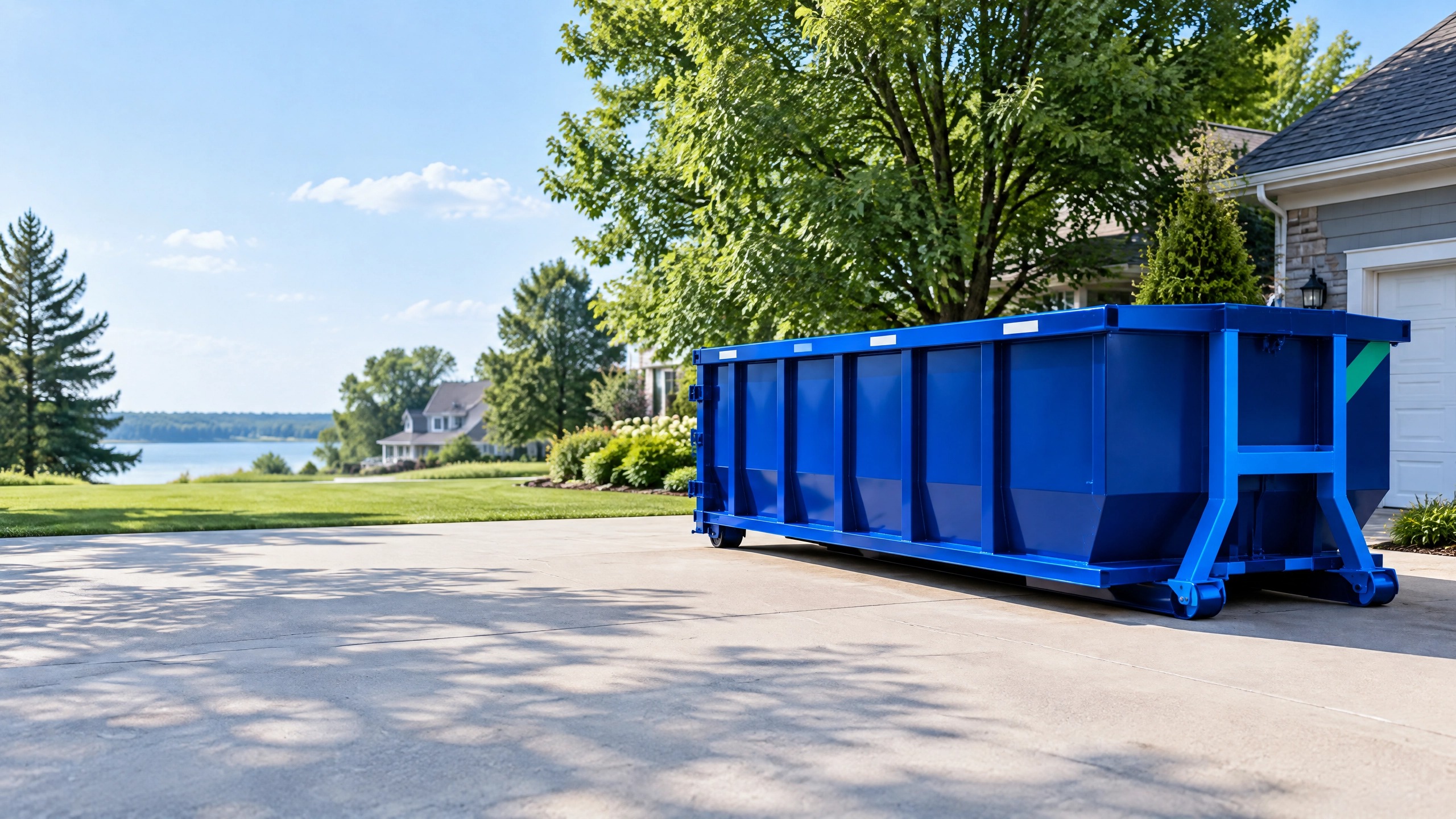
A typical 20-yard roll-off dumpster is a rectangular, open-top steel container with high sides and often a rear loading door. Representative dimensions are approximately 22 feet long, 7–8 feet wide, and 4–5 feet high, although designs vary.