Renting a dumpster sounds straightforward until you start comparing container sizes, rental prices, weight limits, and disposal rules. Should you choose a 10-yard or 20-yard container? How long can you keep it? What happens if your debris exceeds the weight allowance?
If you’re renting for the first time, understanding these details can help you avoid unnecessary expenses and keep your project moving.
Dumpster rental is a waste removal service that provides a container for collecting debris at your property or job site. The rental company delivers the dumpster, you fill it with approved materials, and the company collects it for disposal when you’re finished.
Whether you’re planning a home cleanout, renovation, or construction project, this guide explains everything you need to know about dumpster rental in Michigan, from choosing a container to understanding costs and preparing for pickup.

What Is a Dumpster Rental?
A dumpster rental allows homeowners, contractors, and businesses to temporarily use a large waste container instead of transporting debris to a disposal facility themselves.
The process generally includes:
- Choosing an appropriate container size
- Scheduling delivery to your property or job site
- Loading approved debris during the rental period
- Arranging pickup and waste removal
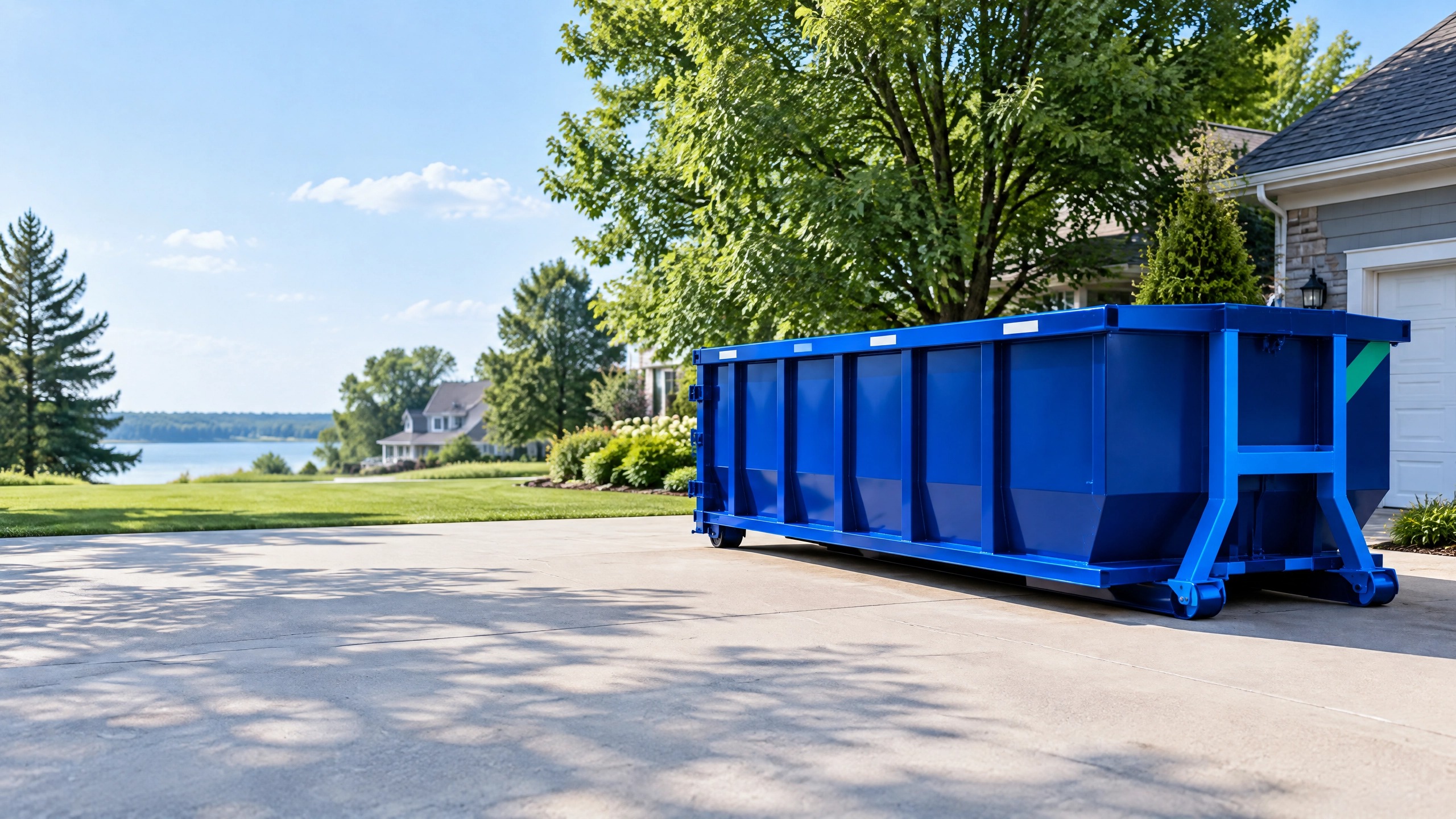
Most temporary rentals use roll-off dumpsters—large, open-top steel containers transported by specialized trucks.
Unlike regular curbside trash collection, a dumpster rental service is designed for larger quantities of waste generated by projects such as remodeling, demolition, roofing, and property cleanouts.
What Is a Dumpster Rental Service Used For?
Dumpster rentals are useful when a project generates more waste than ordinary trash collection can accommodate.
Common uses include:
- Home cleanouts: Removing furniture, boxes, carpeting, and household clutter
- Renovations: Collecting drywall, flooring, cabinets, and other remodeling debris
- Construction: Managing lumber, packaging, and approved building materials
- Roofing: Removing old shingles and related roofing debris
- Demolition: Collecting approved debris from structural or interior removal
- Commercial cleanouts: Clearing offices, retail spaces, and other properties
The main advantage is having a designated place to collect debris as work progresses.
Types of Dumpster Rental Services
Not all dumpsters serve the same purpose. The two main options are temporary roll-off containers and recurring commercial dumpsters.
1. Roll-Off Dumpster Rental
A roll-off dumpster rental is generally used for temporary projects that generate substantial amounts of waste.
These containers are delivered by specialized trucks and remain at the property during the agreed rental period.
They’re commonly used for:
- Residential renovations
- Construction and demolition
- Roofing replacement
- Estate cleanouts
- Large property cleanups
Rearden Environmental offers roll-off dumpster rental services in 10-, 20-, 30-, and 40-yard sizes for projects throughout its Michigan service area.
2. Commercial Dumpster Rental
Commercial dumpsters are typically smaller, enclosed containers designed for recurring waste collection.
Businesses use them for everyday trash generated by regular operations.
Common users include restaurants, offices, retail stores, apartment communities, and warehouses.
Rearden Environmental provides commercial dumpster rental services with 2-, 4-, 6-, and 8-yard front-load containers and scheduled collection.
Which should you choose?
Rent a roll-off dumpster for a temporary cleanup or construction project. Choose recurring commercial service when your business needs waste collected regularly.

How Does Dumpster Rental Work? A Step-by-Step Guide
The rental process is relatively simple, but knowing what happens at each stage helps you plan more effectively.
Step 1: Identify Your Project and Debris
Before contacting a dumpster rental company, determine what you’re removing.
For example, a garage cleanout may involve furniture and household junk, while a bathroom renovation could generate drywall, tile, flooring, and fixtures.
This information helps the provider recommend a container and identify any disposal restrictions.
Step 2: Choose the Right Dumpster Size
Dumpster capacity is measured in cubic yards.
A cubic yard is a volume measuring 3 feet long, 3 feet wide, and 3 feet high.
A 20-yard dumpster therefore holds approximately 20 cubic yards of material by volume, although weight restrictions may prevent you from filling it completely with dense debris.
Step 3: Request a Quote
Provide your delivery address, preferred dates, project details, and estimated waste volume.
Ask what the quote includes, especially:
- Rental period
- Delivery and pickup
- Included weight allowance
- Additional weight charges
- Prohibited materials
- Extension and extra-haul charges
Step 4: Prepare the Delivery Location
Choose a stable, accessible area where the dumpster can be safely placed.
Driveways are common locations, but construction sites may have designated loading areas.
Make sure the delivery truck can reach the location without overhead or ground-level obstructions.
Step 5: Load Your Dumpster
Once the container arrives, you can begin loading approved debris.
Keep materials below the fill line, distribute heavy loads appropriately, and avoid prohibited items.
Step 6: Schedule Pickup
When the project is complete, contact your provider to arrange collection.
The company removes the container and transports the waste to an appropriate disposal or processing facility.
For additional Michigan-specific booking guidance, read How to Rent a Dumpster in Michigan.

Dumpster Rental Sizes: Which One Do You Need?
Choosing the right size is one of the most important parts of renting a dumpster.
A container that’s too small may require an additional haul. A container that’s unnecessarily large may increase your rental cost.
Here’s a comparison of Rearden Environmental’s available roll-off sizes.
| Dumpster Size | Dimensions (L × W × H) | Best For |
|---|---|---|
| 10 Yard | 11′ × 7′ × 3.5′ | Small cleanouts, limited renovations, approved heavy debris |
| 20 Yard | 22′ × 8′ × 4.5′ | Medium cleanouts, roofing, remodeling, demolition |
| 30 Yard | 22′ × 8′ × 6.5′ | Major renovations, residential construction, larger cleanups |
| 40 Yard | 22′ × 8′ × 8′ | Commercial construction, industrial projects, high-volume debris |
Dimensions are based on Rearden Environmental’s published specifications. Weight allowances and material acceptance depend on the rental arrangement.
10-Yard Dumpster: Small Projects
A 10-yard container is suitable for limited cleanouts, small remodeling projects, and certain approved heavy materials.
Its compact design can be useful where placement space is restricted.
Explore 10-yard dumpster dimensions and capacity for more details.
20-Yard Dumpster: Medium-Sized Projects
A 20-yard dumpster works well for many kitchen renovations, flooring projects, roofing jobs, and residential cleanouts.
It provides substantial capacity without requiring the tallest available container.
30-Yard Dumpster: Large Renovations
A 30-yard dumpster is a practical option for whole-house renovations, construction, and substantial property cleanups.
It offers additional room for bulky debris such as cabinets, drywall, and lumber.
40-Yard Dumpster: Long-Term Industrial Projects
A 40-yard dumpster is Rearden Environmental’s largest standard roll-off container, designed primarily for industrial facilities and long-term waste management needs.
It’s particularly suitable for manufacturing plants, industrial operations, and facilities that generate substantial volumes of waste over extended periods. These containers are often kept on-site for 6–36 months, providing a convenient solution for ongoing debris collection.
While 40-yard dumpsters offer significant capacity, permitted weight limits and material restrictions still apply.
How to Estimate the Dumpster Capacity You Need
Start by estimating the total volume of debris.
For a roughly rectangular pile, use:
Cubic yards = Length × Width × Height (in feet) ÷ 27
For example, a pile measuring 10 feet long, 8 feet wide, and 4 feet high contains approximately 11.9 cubic yards.
A 10-yard dumpster would likely be insufficient for that pile.
However, two additional considerations matter:
Bulky debris: Furniture, cabinets, and irregular materials can leave empty spaces inside a container, reducing practical loading efficiency.
Heavy debris: Concrete, brick, dirt, and masonry can reach weight limits before filling the dumpster.
If you’re between sizes, ask the provider whether a larger container or an additional scheduled haul would be more economical.
How Much Does Dumpster Rental Cost in Michigan?
Dumpster rental prices depend on the container size, rental duration, material type, included weight allowance, and delivery location.
There isn’t one fixed price that applies to every project.
Factors That Affect Dumpster Rental Service Cost
| Cost Factor | Why It Matters |
|---|---|
| Dumpster size | Larger containers may have higher rental rates |
| Rental duration | Additional days may increase the total |
| Debris weight | Exceeding the included allowance can result in extra charges |
| Material type | Some debris requires specialized disposal |
| Delivery distance | Transportation costs vary by location |
| Additional pickups | Multiple hauls or container exchanges affect the total |
How to Compare Dumpster Rental Quotes
If you’re researching rent a dumpster prices or roll off dumpster rental prices, compare the full service terms rather than the advertised starting rate.
For example, two companies may quote different prices for a 20-yard container, but one may include a longer rental period or a different weight allowance.
Ask for an itemized explanation of what’s included.
For a detailed breakdown, see How Much Does It Cost to Rent a Dumpster?.
Is the Cheapest Dumpster Rental Near Me Always the Best Deal?
Not necessarily.
A lower initial price may become more expensive if you need an additional pickup, exceed the included weight allowance, or extend the rental.
The better value is a container that fits your project and has rental terms you understand before delivery.
What Can You Put in a Rental Dumpster?
Most standard roll-off dumpsters accept common non-hazardous debris from household cleanouts, remodeling, and construction projects.
However, material restrictions vary by provider and disposal facility.
Commonly Accepted Materials
- Household junk and approved furniture
- Wood and lumber
- Drywall and plaster
- Flooring and carpeting
- Cabinets and remodeling debris
- Approved roofing shingles
- General construction debris
Clean concrete, brick, and asphalt may be accepted in designated containers, subject to weight and material restrictions.
Materials That Require Separate Disposal
Standard roll-off dumpsters generally do not accept:
- Fuels, oils, and liquid chemicals
- Batteries and certain electronics
- Tires
- Asbestos-containing materials
- Hazardous or regulated waste
- Refrigerant-containing appliances
- Medical waste
- Other materials requiring special handling
Michigan Dumpster Disposal Rules
The Michigan Department of Environment, Great Lakes, and Energy (EGLE) regulates waste management under Michigan’s environmental laws.
Michigan landfill restrictions include certain materials such as used oil, whole tires, lead-acid batteries, yard clippings, and hazardous waste. Some materials have exceptions or special handling requirements.
These legal restrictions are not identical to every dumpster company’s acceptance policy.
For example, some household materials may not be categorically prohibited from all landfills but may still be refused by a particular hauler.
Before loading questionable materials, review the provider’s rules and consult Michigan EGLE’s landfill disposal guidance.

Where Can You Place a Rental Dumpster?
A dumpster should be placed where the delivery truck can safely access it and where it won’t interfere with your project.
Common locations include:
- Private driveways
- Designated construction-site areas
- Suitable commercial-property loading areas
- Public streets, where permitted
Before delivery, check the available width and length, overhead clearance, ground conditions, and space for the truck to approach.
Do You Need a Dumpster Permit in Michigan?
Permit requirements depend on the municipality and placement location.
A dumpster on a private driveway generally doesn’t require the same public right-of-way permit as one placed on a street, although local rules or property restrictions may still apply.
Public street, sidewalk, or right-of-way placement may require municipal approval.
For example, Detroit lists dumpsters among activities requiring right-of-way permits when occupying public space.
Check the requirements with your city or township before scheduling delivery.
Benefits of Renting a Dumpster
A dumpster rental offers several practical advantages over collecting debris in piles or making repeated disposal trips.
1. Less Time Spent Transporting Waste
You can collect debris in one container rather than repeatedly loading and unloading a vehicle.
This is especially useful for projects that generate waste over several days.
2. A More Organized Work Area
Keeping debris in a designated container helps reduce clutter around driveways, renovation areas, and construction sites.
A cleaner work area also makes it easier to move materials and equipment.
3. More Predictable Waste Management Costs
A clear rental quote helps you plan for disposal expenses before the project begins.
Weight allowances and additional charges still need to be understood.
4. Flexible Cleanup Scheduling
You can load approved debris as work progresses instead of coordinating every disposal trip separately.
5. Suitable Capacity for Different Projects
With multiple container sizes available, you can match the rental to your debris volume instead of relying on ordinary trash collection.
Dumpster Rental vs. Junk Removal vs. Taking Waste to the Dump
Dumpster rental isn’t the right solution for every situation.
| Option | Best For | Main Consideration |
|---|---|---|
| Dumpster rental | Ongoing cleanouts, remodeling, construction | You load the debris yourself |
| Full-service junk removal | Removing existing items without doing the lifting | Service includes labor, subject to provider terms |
| Self-hauling to a disposal facility | Small quantities of approved waste | Requires transportation, unloading, and disposal fees |
For a few small items, self-hauling may be economical if you have suitable transportation.
For a large pile of furniture you can’t move yourself, junk removal may be more convenient.
For a renovation generating debris throughout the project, a roll-off dumpster is often more practical.
Contractor Tips: How to Manage Dumpster Rentals on a Job Site
Contractors need more than sufficient container capacity. Waste collection must also fit the project schedule.
These practices can help prevent avoidable delays.
Match the Dumpster to Each Project Phase
Demolition often generates substantial debris early in the project, while later stages may produce smaller amounts of packaging, drywall offcuts, and finishing materials.
Estimate waste by phase rather than assuming every stage produces the same volume.
Separate Heavy and Bulky Materials
Concrete and masonry have different handling requirements from lumber and drywall.
Ask whether separate containers are needed before mixing materials.
Schedule Container Exchanges Before Work Stops
If a dumpster is likely to fill before the next phase is complete, coordinate an exchange in advance.
This can prevent debris from accumulating around the work area while waiting for pickup.
Assign Responsibility for Loading Rules
Make sure crew members know which materials are accepted, where prohibited items should go, and how high the container may be loaded.
A short briefing can help prevent contaminated loads and disposal delays.
Include Waste Removal in Project Planning
Waste disposal should be considered alongside labor, material delivery, and site access.
For contractors managing multiple projects, consistent disposal planning can improve scheduling and reduce unnecessary hauling expenses.
What to Know Before Renting a Dumpster in Michigan
Before booking, review these essential details.
- Project type: What work are you completing?
- Debris materials: What exactly will go into the dumpster?
- Estimated volume: How much waste will the project generate?
- Weight: Will you be removing dense materials?
- Rental dates: When do you need delivery and pickup?
- Placement: Is there enough room for the container and truck?
- Permits: Does the location require municipal approval?
- Quote terms: What’s included, and what could cost extra?
Having these answers ready makes it easier to compare providers and choose a suitable rental.
How to Choose a Dumpster Rental Company in Michigan
When comparing providers, focus on the service details that affect your project.
Local Service Availability
Confirm that the company serves your delivery address and can accommodate your schedule.
Searching for dumpster rental near me or roll off dumpsters near me can help identify providers, but always verify their actual service areas.
Appropriate Container Sizes
A good provider should help you choose a container based on debris type, volume, and weight—not simply recommend the largest option.
Clear Pricing
Ask about delivery, pickup, rental duration, included weight, and additional fees.
Reliable Communication
Confirm how to request pickup, extend a rental, or arrange a container exchange.
Material and Disposal Guidance
A dependable provider should explain prohibited materials and special handling requirements before delivery.
Rearden Environmental is a locally operated dumpster rental company in Michigan, offering roll-off containers, upfront pricing, and guidance on selecting the right size.
For help evaluating providers, read Where to Rent a Dumpster.
Rent the Right Dumpster With Rearden Environmental
Understanding how dumpster rental works makes it easier to choose the right container, compare costs, and prepare your property before delivery.
The key is to match the dumpster to your debris volume, material type, project schedule, and available space.
Whether you’re planning a residential cleanout, renovation, roofing project, or commercial construction job, Rearden Environmental provides dumpster rental service options designed around your requirements.
Our team can help you select a suitable container, understand accepted materials, and arrange delivery and pickup.
Frequently Asked Questions About Dumpster Rental
What Is Dumpster Rental Service?
Dumpster rental is a waste management service in which a provider delivers a container to your property, allows you to load approved debris during an agreed period, and collects the container for disposal afterward.
How Does Dumpster Rental Work for First-Time Renters?
Choose a dumpster size, request a quote, schedule delivery, load approved waste, and arrange pickup. Confirm the rental period, weight allowance, accepted materials, and placement requirements before booking.
What Is Dumpster Rental Service Cost?
The cost depends on container size, rental duration, debris weight, disposal requirements, and delivery location. Request a project-specific quote rather than relying on a general advertised price.
What Is Dumpster Rental Service Near Me?
This search refers to companies that deliver and collect dumpsters in your area. Compare local availability, container sizes, pricing terms, accepted materials, and customer support before choosing a provider.
What Is Dumpster Rental Service Phone Number for Rearden Environmental?
For dumpster rental inquiries, contact Rearden Environmental at 1-855-50-TRASH to discuss container availability, project requirements, and pricing.
How Long Can I Keep a Rental Dumpster?
Rental periods vary by provider and project. Rearden Environmental offers rental arrangements based on project requirements. Confirm the agreed duration and extension terms before delivery.
What Size Dumpster Should I Rent?
A 10-yard dumpster may suit small cleanouts, a 20-yard container works for many medium renovations, and 30- or 40-yard dumpsters provide additional capacity for larger projects. Debris weight and placement space also affect the choice.
Are Waste Bin Rentals the Same as Dumpster Rentals?
The terms are often used interchangeably. However, waste bin rentals may refer to different container styles, including temporary roll-off dumpsters and smaller commercial bins used for recurring collection.
Can I Rent a Dumpster for Just One Day?
Some providers offer short-term rentals, but availability and pricing vary. Ask whether a one-day rental is offered and whether the delivery and pickup schedule works for your project.
Can I Put Concrete in a Rental Dumpster?
Clean concrete may be accepted in designated dumpsters. Because concrete is heavy, confirm container requirements and permitted weight before loading.
Is Waste Management Dumpster Rental Different From Roll-Off Rental?
Waste management dumpster rental is a broad term that can include temporary roll-off containers and recurring commercial trash collection. A roll-off dumpster is generally used for larger, temporary cleanup or construction projects.
Is Renting a Dumpster Worth It?
A dumpster can be worthwhile when your project generates substantial waste over several days. It reduces repeated disposal trips and gives you a designated place to collect debris. For very small loads, self-hauling may cost less.